Rain on the visor, and a wiper that takes its time
When you drive the Prospector in first person you look out through its glass, and in the rain that glass gets wet. The wiper is slow now, so the water stays a while: in a storm the blade clears the glass and it's full again 2 to 4 seconds later, with water pouring down it, before the next sweep comes round.
Water with a history
The water you see is everything that landed since the blade last passed that spot. Beads come in three sizes, and each one is a little lens showing the scene behind it small and upside down. A heavy bead lets go now and then and runs down as a rivulet, stopping and starting, leaving a wet track behind it. In heavy rain a film of water runs down the whole glass and smears the view. The wind pushes the running water sideways, and lightning makes the highlights flash.
It's all drawn in one pass over the picture, without a water simulation. The blade's angle is a known function of time, so for every pixel the shader works out when the blade last crossed it and how much rain has fallen since. That's the same rule the core tests check, it doesn't depend on the frame rate, and nothing is lost when the glass is out of sight. The glass costs 0.25 ms of GPU time a frame in a storm and 0.18 ms in rain.
A slower wiper
The first wiper, on 19 October, was too eager: every 5 seconds in light rain, every 1.8 in steady rain, and nonstop in a storm, so the water never had time to build. On 21 October it slowed down to every 10 seconds, 5, and 3.7 in a storm, with each sweep out and back taking 0.8 seconds, or 0.55 at the fast setting. How fast the glass fills behind the blade is now drawn for each sweep: 2 to 4 seconds in heavy rain, longer in lighter rain in proportion. A small WIPERS lamp on the dashboard shows the mode, and each pass has its own sound, rubber on wet glass or a squeak on the last dry sweep, made with ElevenLabs.
Pouring, pushed and fogged
The same day brought heavier water. In heavy rain, streams pour down the glass without a break and bend the view through them. Drive forward and the air pushes them back up the glass and out to the sides, at full push from 9 m/s. Just before a sweep in a downpour the water warps the view into shapes and lights.
A fog builds on the inside of the glass in rain and on cold nights: none on a dry day, a little on a dry night, all of it in rain at night. It takes about 40 seconds to build and 70 to clear, and the lights bloom through it. The wiper can't touch it. A demister vent under the middle of the glass keeps a fan above it clearer, so on a foggy night the lower middle is where you see out.
Through the glass
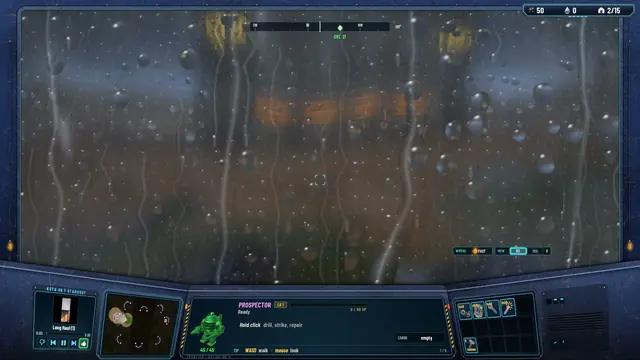 A storm, just before a sweep.
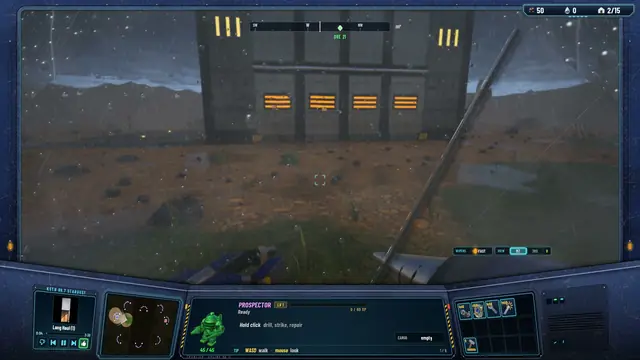 Right behind the blade.
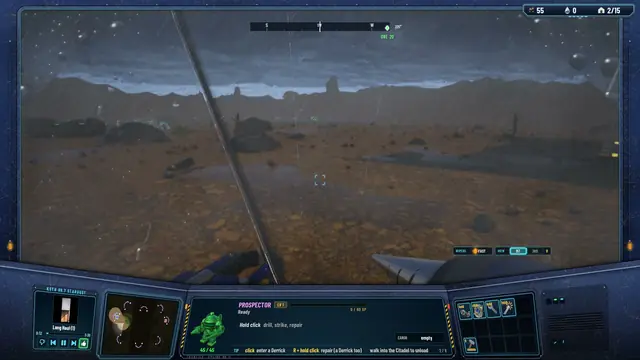 Driving forward: the water climbs.
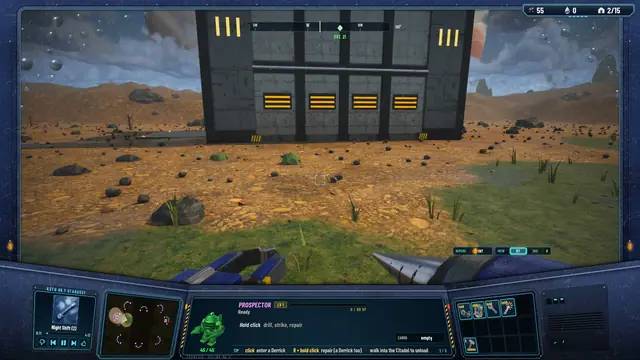 Light rain: beads build between sweeps.
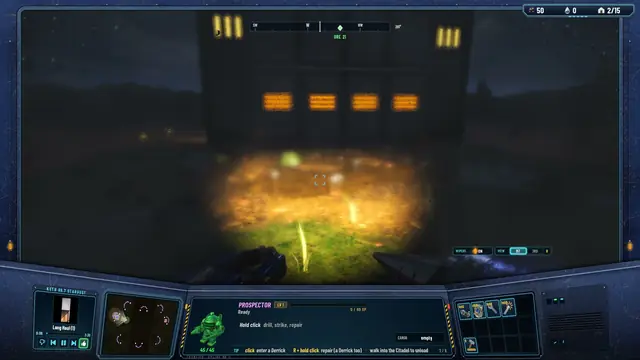 Rain at night: the fog, and the demister's clear patch.
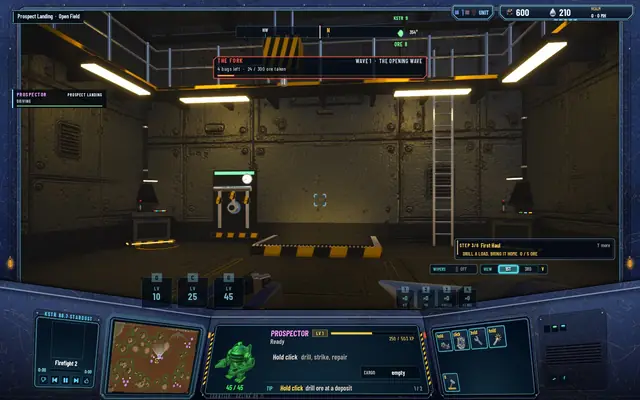 In the Citadel's hall the glass dries, corners too.
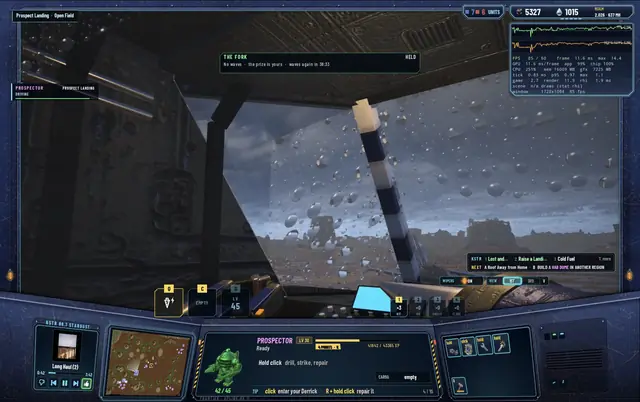 Before the fix: from the Dropship's bay, drops spilled past the left pillar.
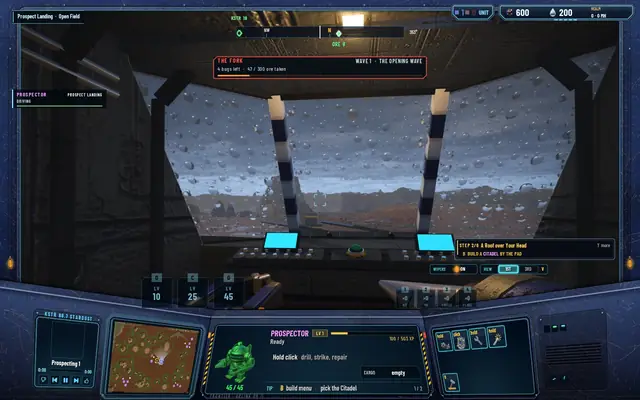 After: water only on the panes.
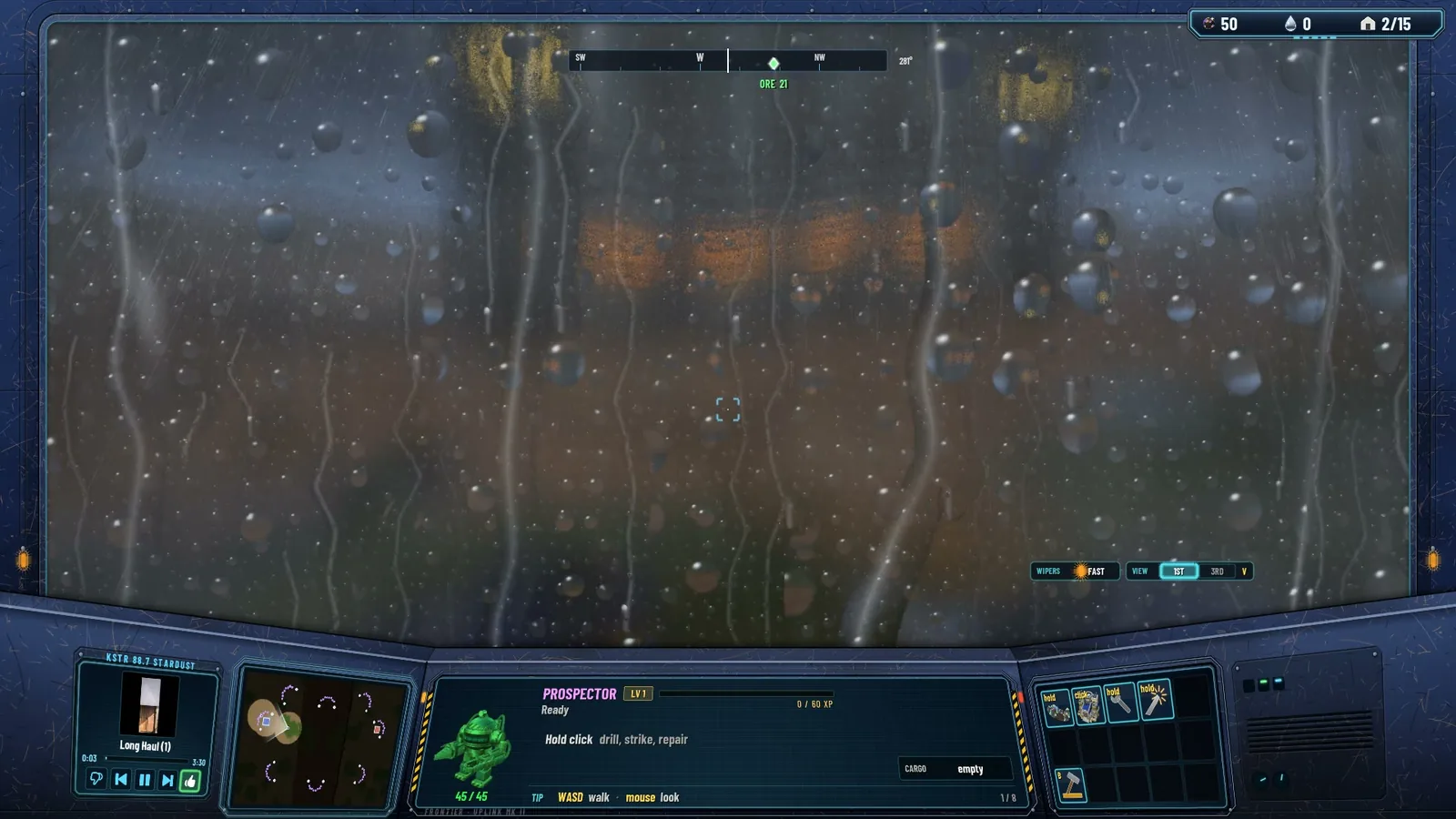
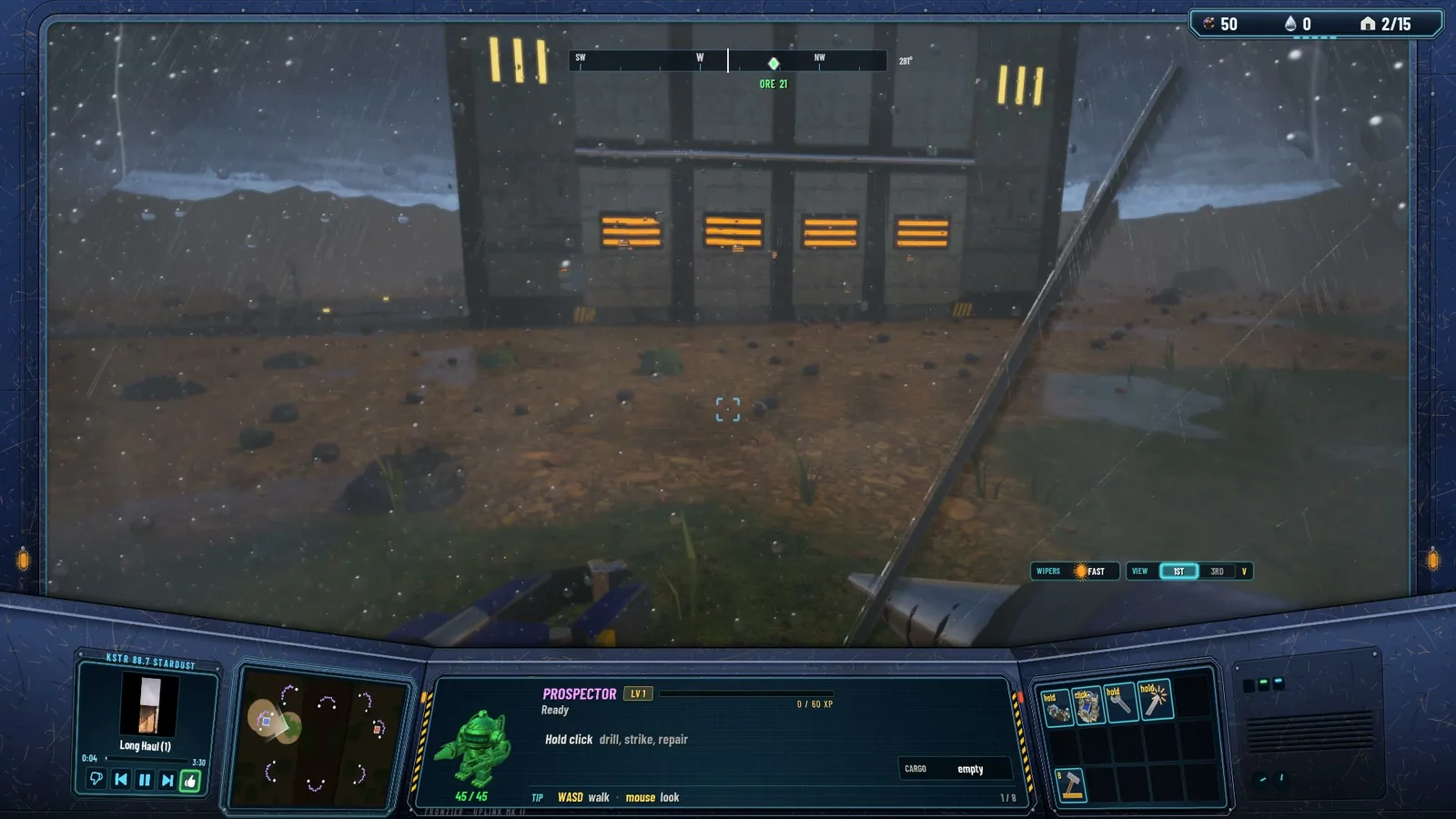
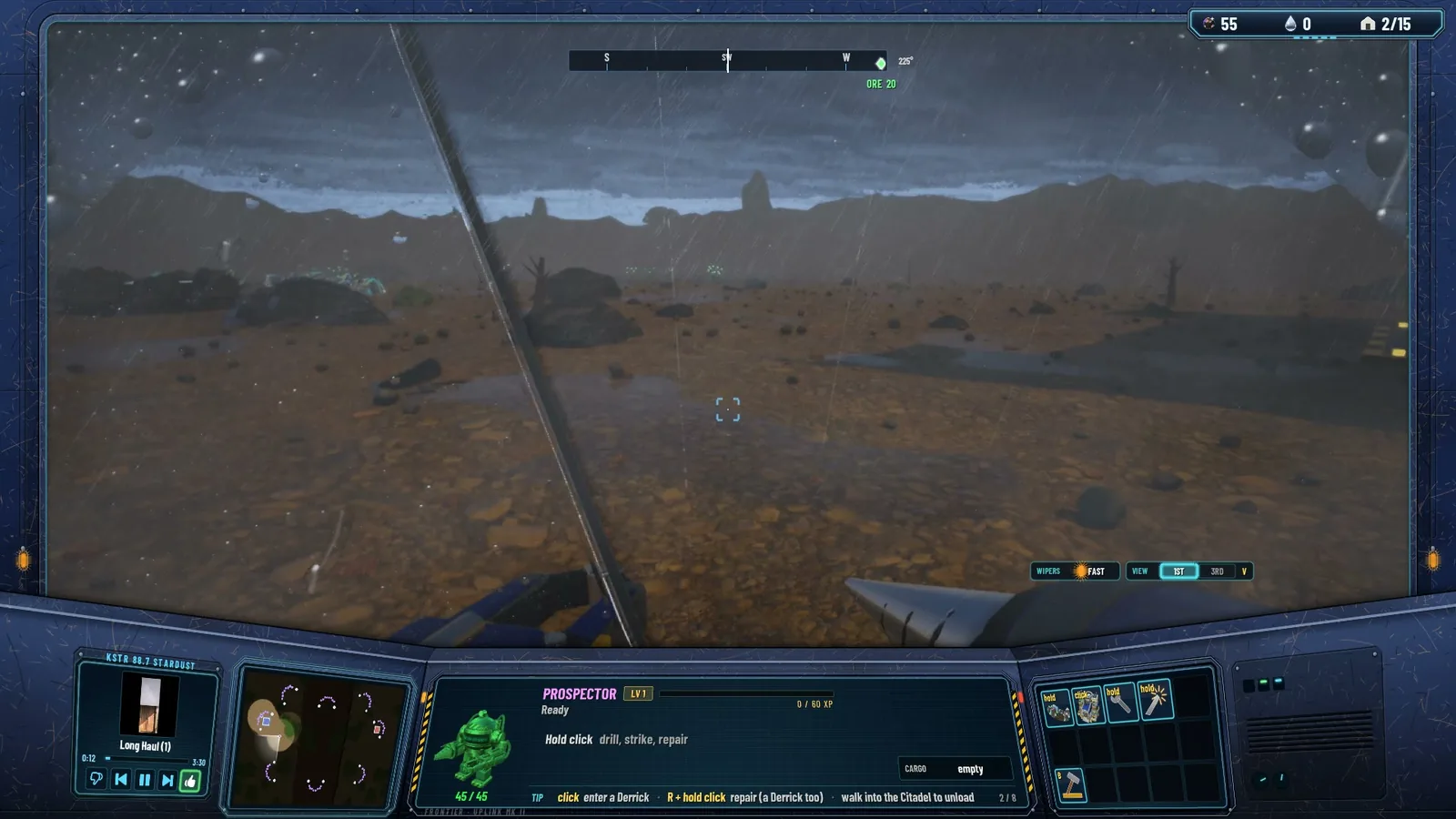
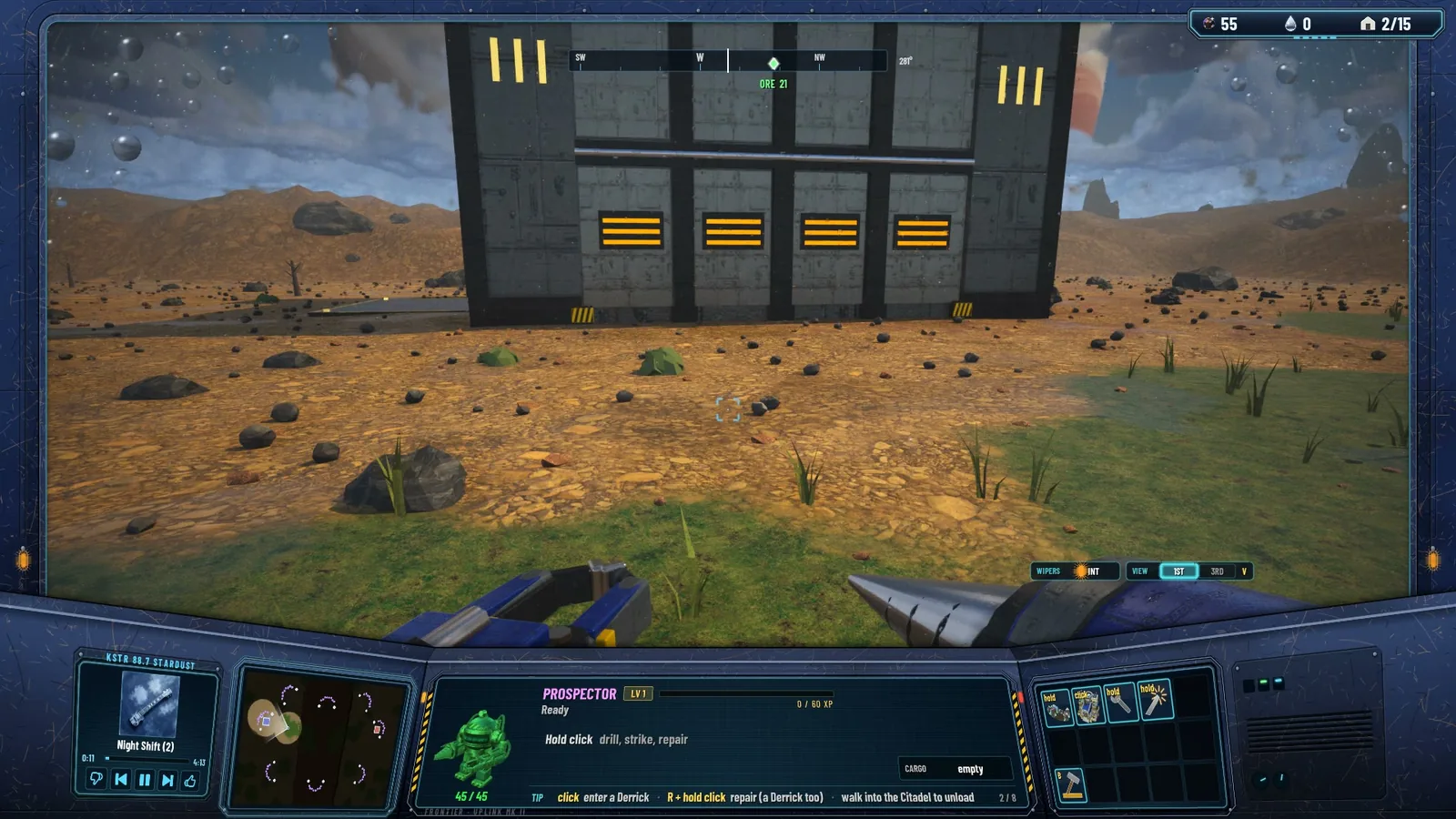
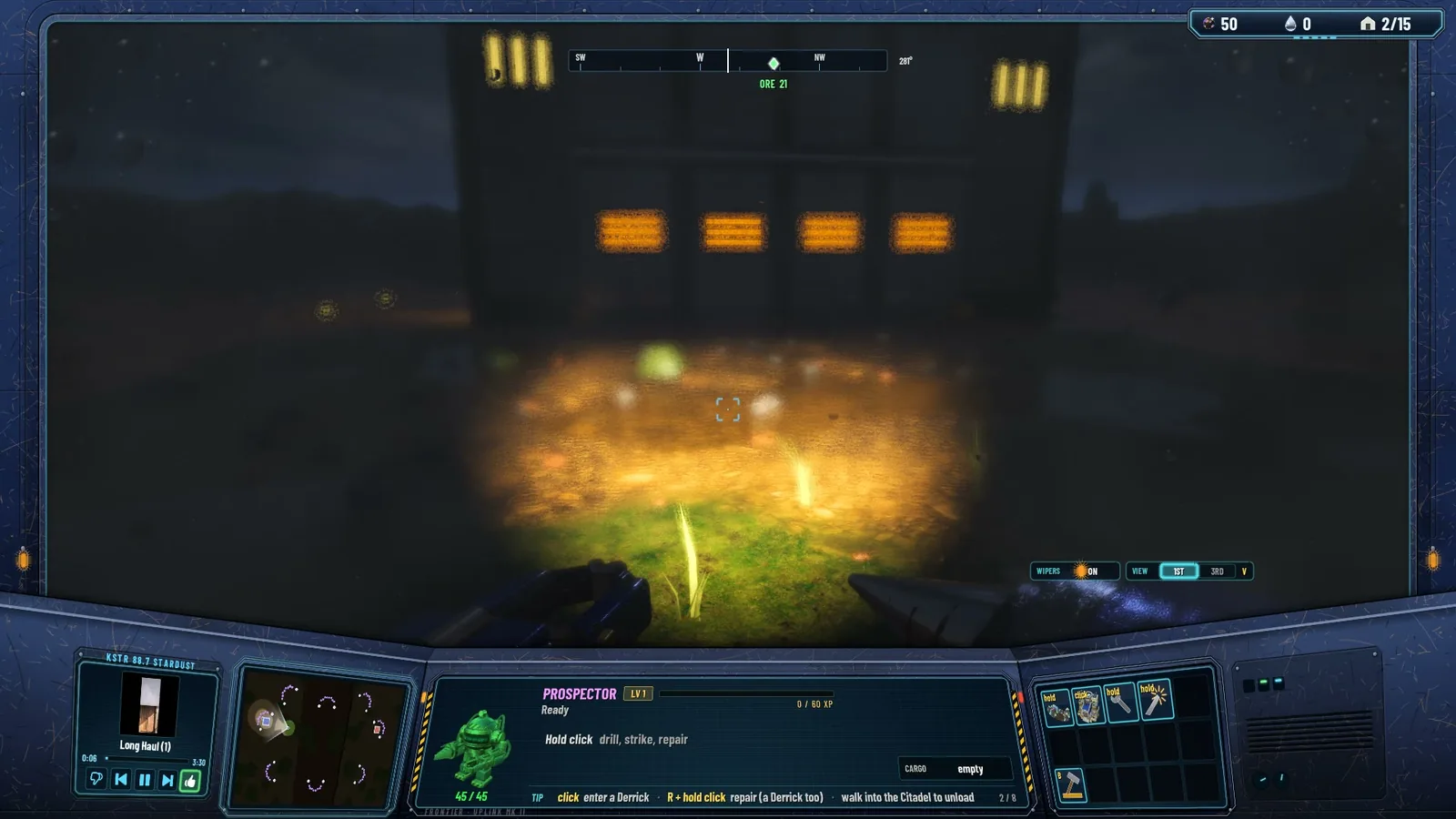
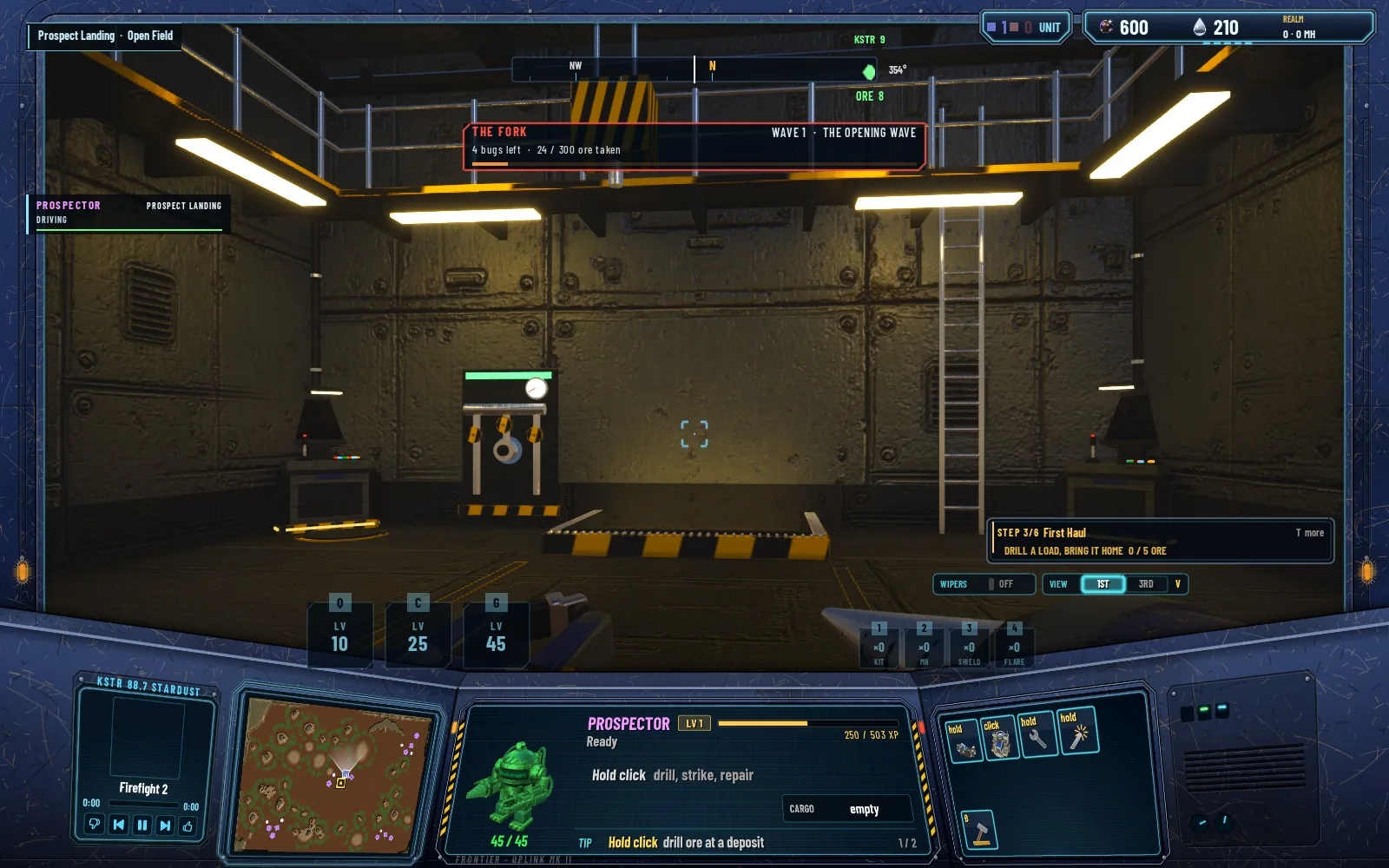
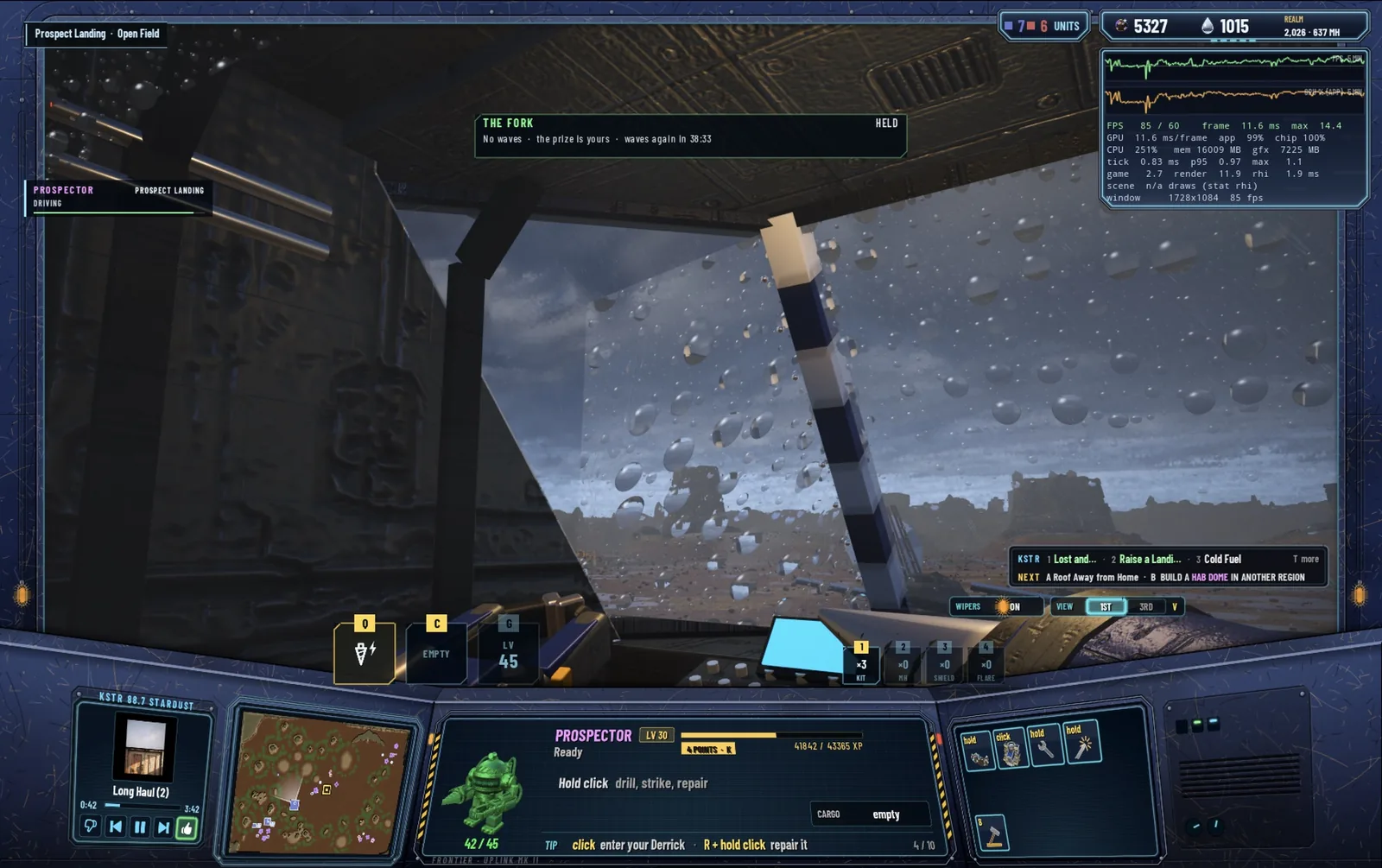
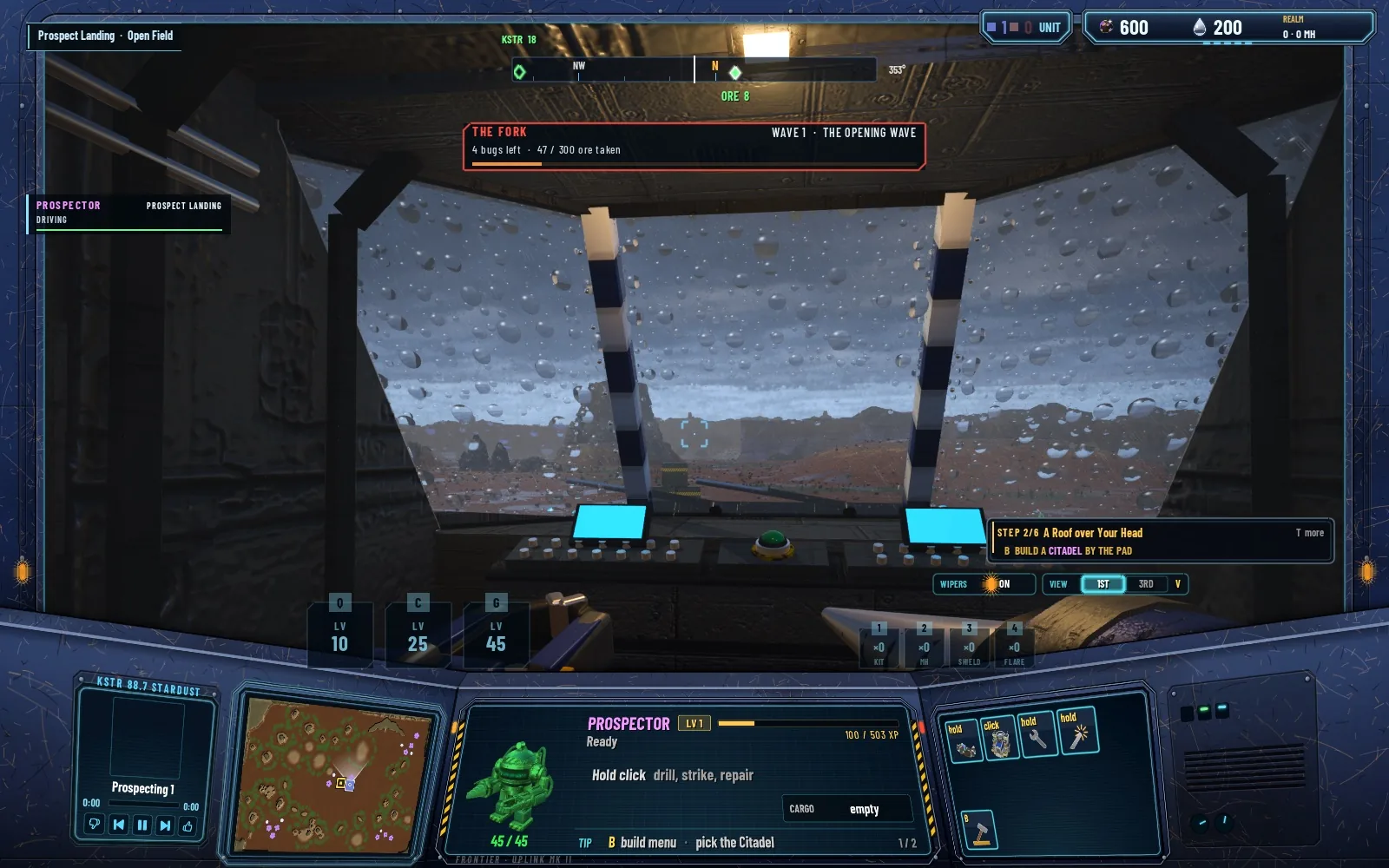
Dry under a roof
It doesn't rain in a Citadel's hall or in a Dropship's bay. When the unit you drive is under a roof, no more water lands, the wiper makes its last two sweeps and parks, and the whole glass dries in about 5 seconds. Until the fix on 21 October the visor kept drops in its top corners inside the ship, the ones the blade never reaches. Those dry now too.
The walk-in Dropship's windshield has the same water on its own three panes, with two blades on the middle one. I was standing in its bay in the rain looking out when I saw drops spill past the left pillar onto the bay's wall with a hard slanted edge. The side panes are parallelograms, and the shader had read them as squares. Now each pane's corners are solved properly, and the water stays on the glass.
What it cost
The pouring streams, the flood and the fog were measured against the 19 October glass on a busy Mac: the difference was inside the noise, at most about 0.12 ms. To keep it there, the streams take two hashes of noise where they first took four, and the blur only runs where it is wide enough to show.