The world, felt: nine things I noticed playing
On 19 October I played the single-player RPG for a while and wrote down what felt wrong. Nine things. Each went to its own agent in its own copy of the repository, and all nine were merged the same day with every test suite green. Most of them are about whether the world feels like a place.
No rain indoors
It rained inside the Citadel's hall: streaks falling through the roof, drops on the visor, a wet floor. Now the inside of every finished Citadel is a shelter box. Rain stops at the doorway, the floor and the inner walls stay dry while the outside of the same building gets wet, the drops on the visor ease off over a second and a half, and the rain's sound drops to 40% and goes dull, as if through walls. The water on the visor was another of the nine; it has its own post.
Where regions meet
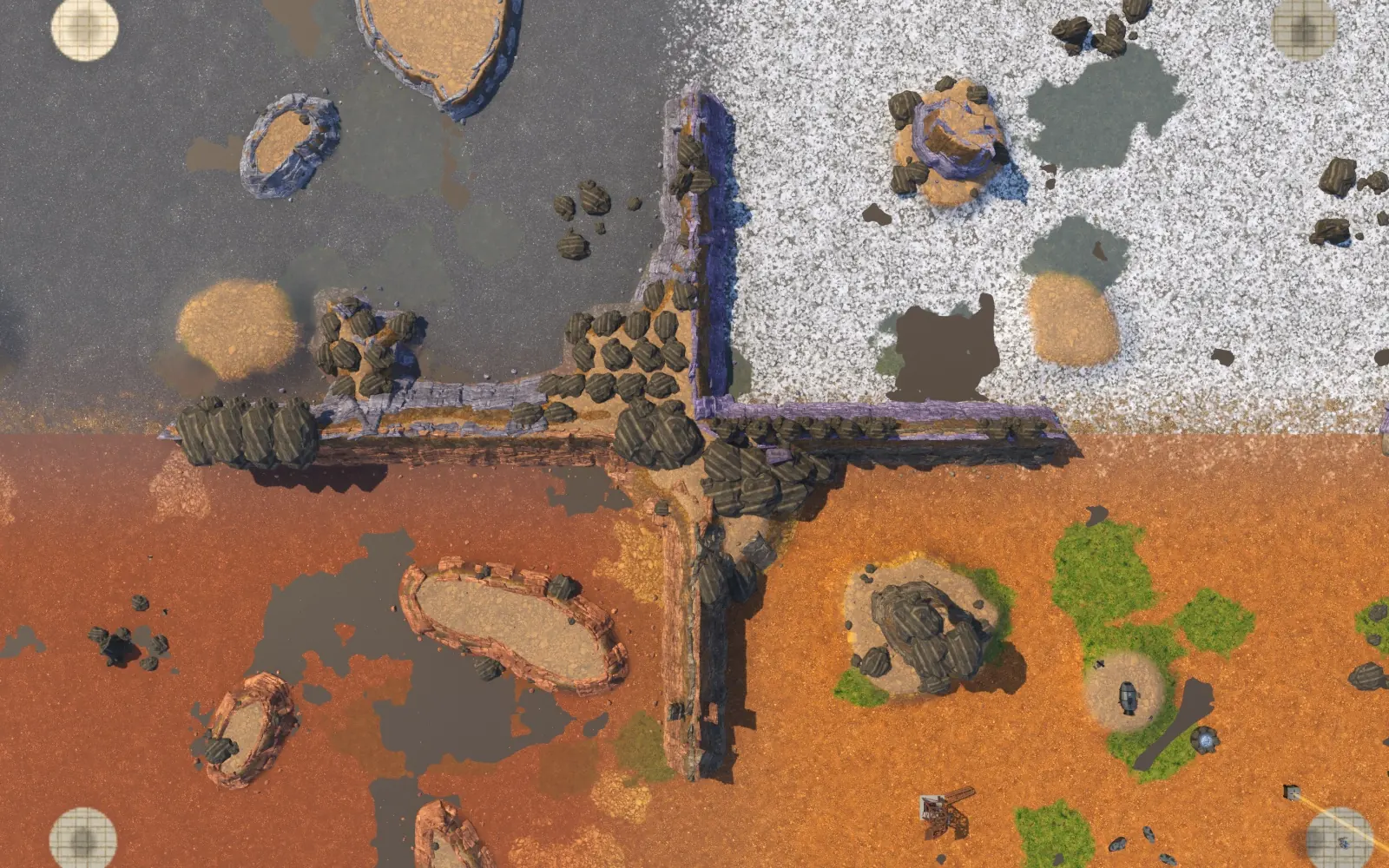
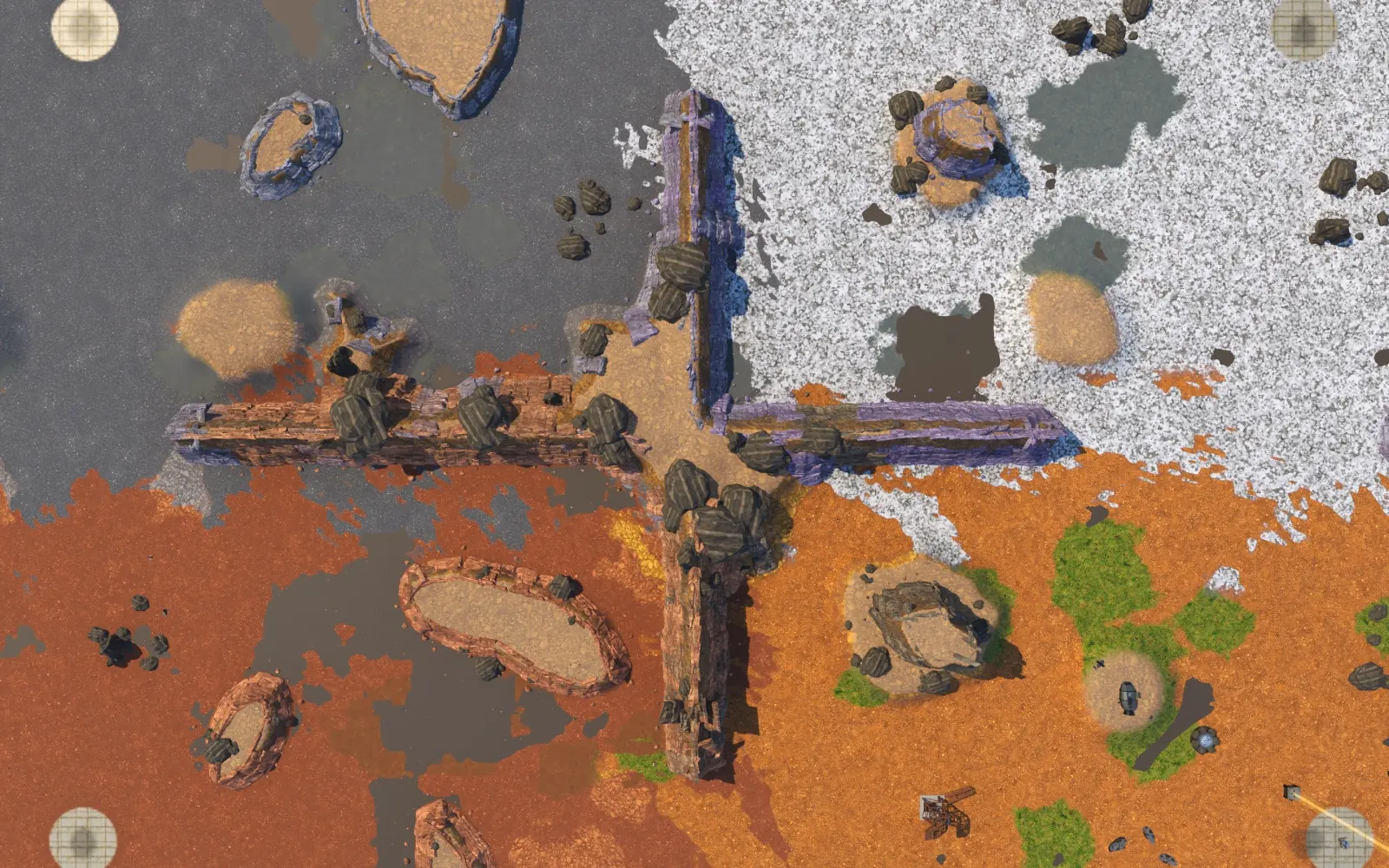
Each region has its own ground: rust, ash, salt, slag, frost, glass. Where two met, the line was perfectly straight, and at a corner where four met it was a cross. Now the neighbour's ground comes in as drifted patches across a band about 34 cells wide, whose middle wanders up to 10 cells off the edge, bent along a prevailing wind. The weights are the same from both sides of an edge, so the two regions agree; a core test checks 60,000 points. The rocks and plants follow the same blend. It costs at most 0.3 ms of GPU time, over a corner.
No straight rim
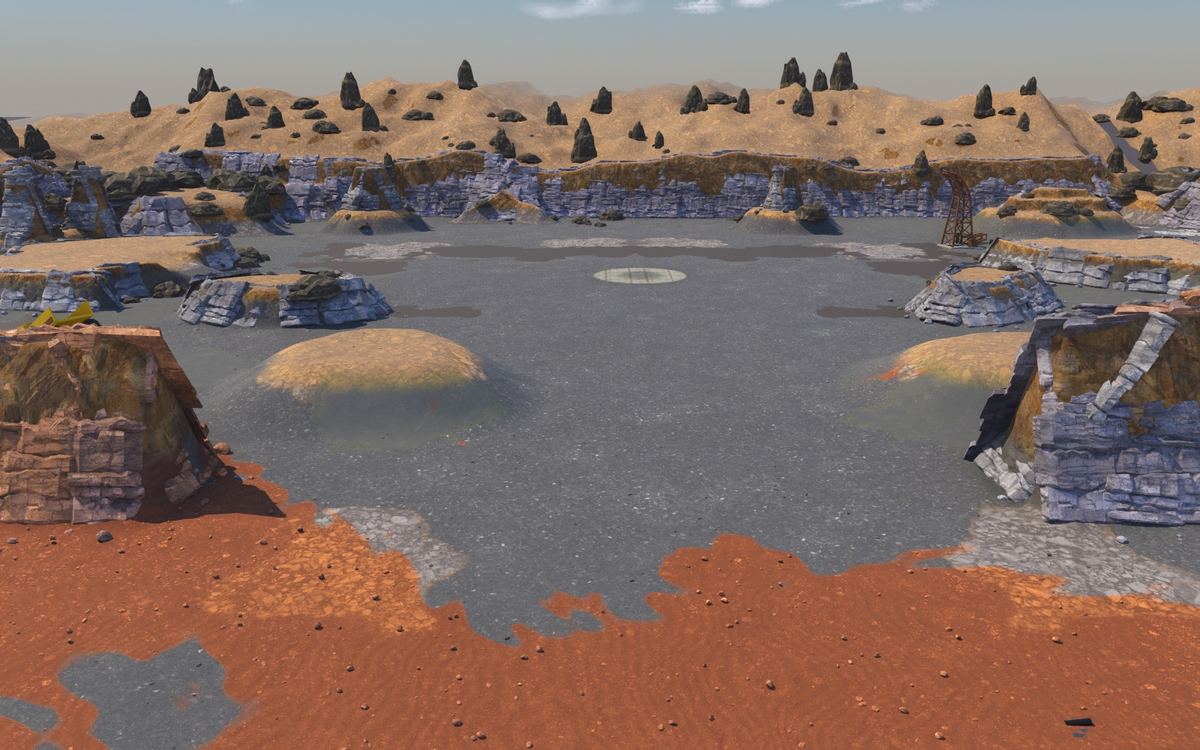
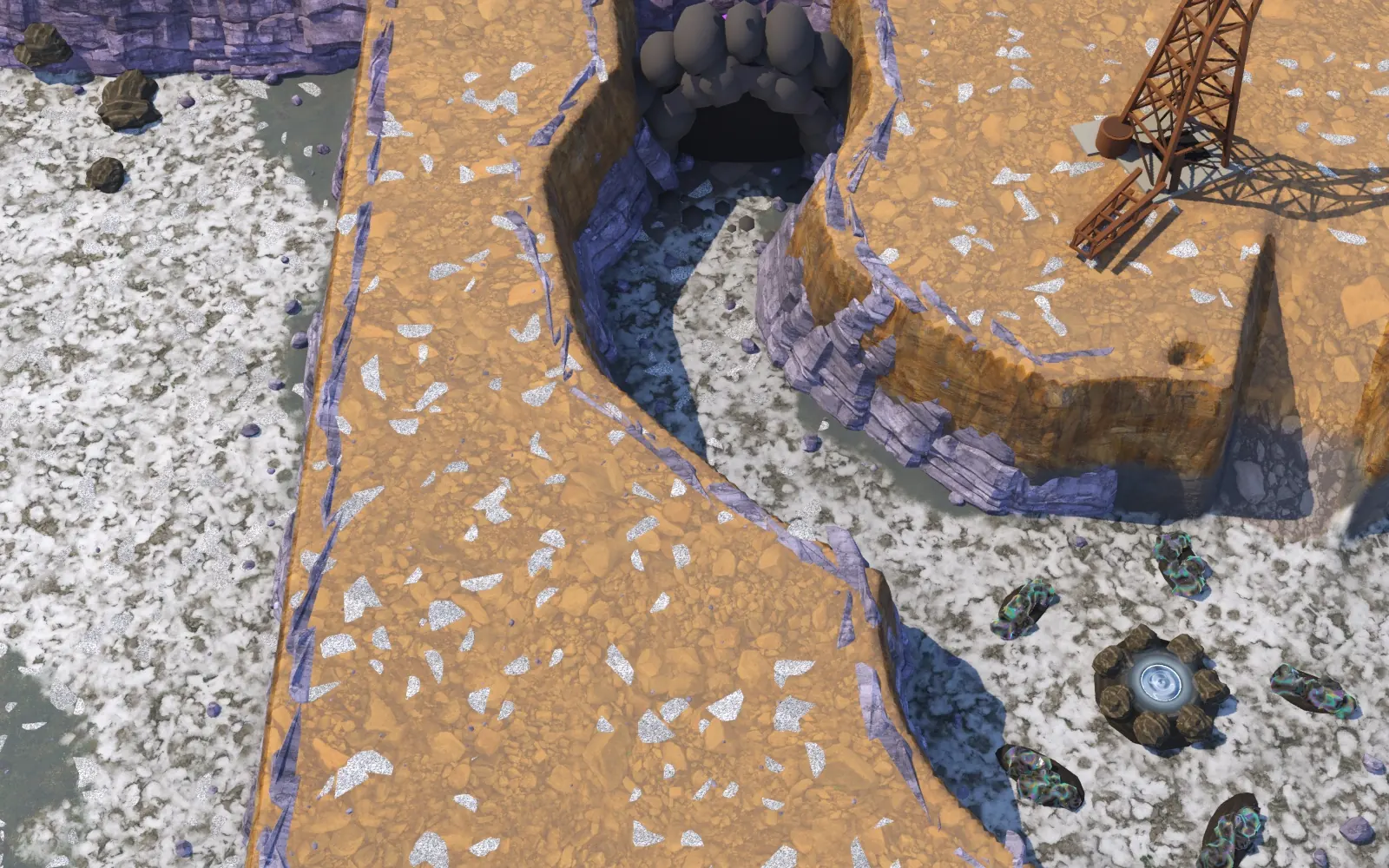
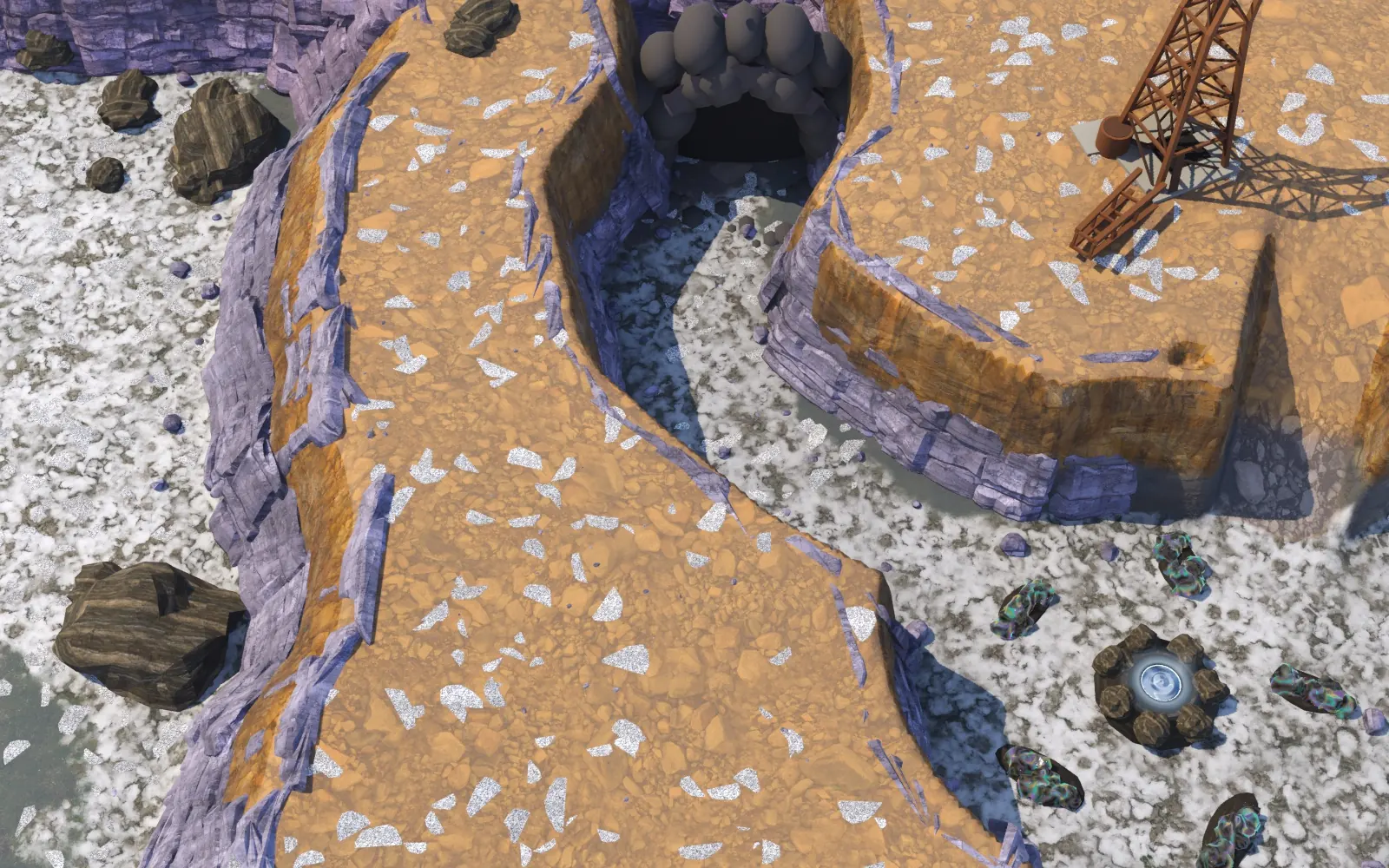
Region rims ran in straight lines. Now erosion is the last step of building every region, on the server and the game alike: the rim wanders 1.8 cells out to 3.6 in, in waves of 12 to 18 cells, the canyons' outer faces get a slope set back 3 to 5 cells with fallen blocks at the foot, and wall rocks gather in clusters, never three in a row. The build counts runs of 8 cells or more that stay within a quarter of a cell of a line. There are none left in any of the nine regions. The land changed, so it takes a new world.
The ringshadow crosses the right way
Twice a day the giant's rings throw a band of shadow across the land, and ore drilled under it pays half again. The band always crossed toward the same bearing, 100°, at both sweeps. Now it moves the way the shadow of the ring's arc really would as the arc crosses the sun: toward 186° at 11:30, south and a little west, and toward 169° at 16:00, south and a little east. Its edges lie along the arc's line on the ground.
The night let the base disappear
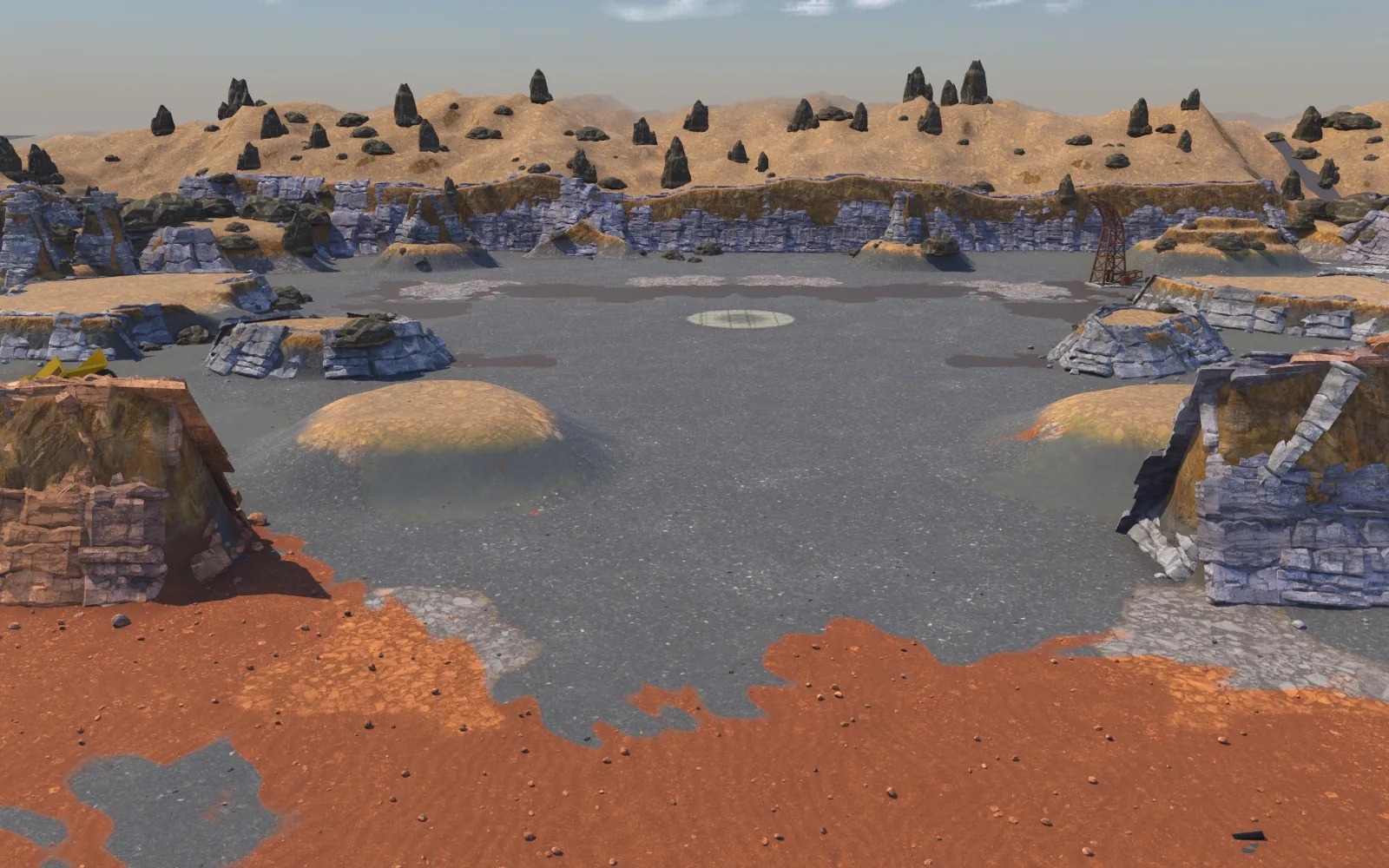
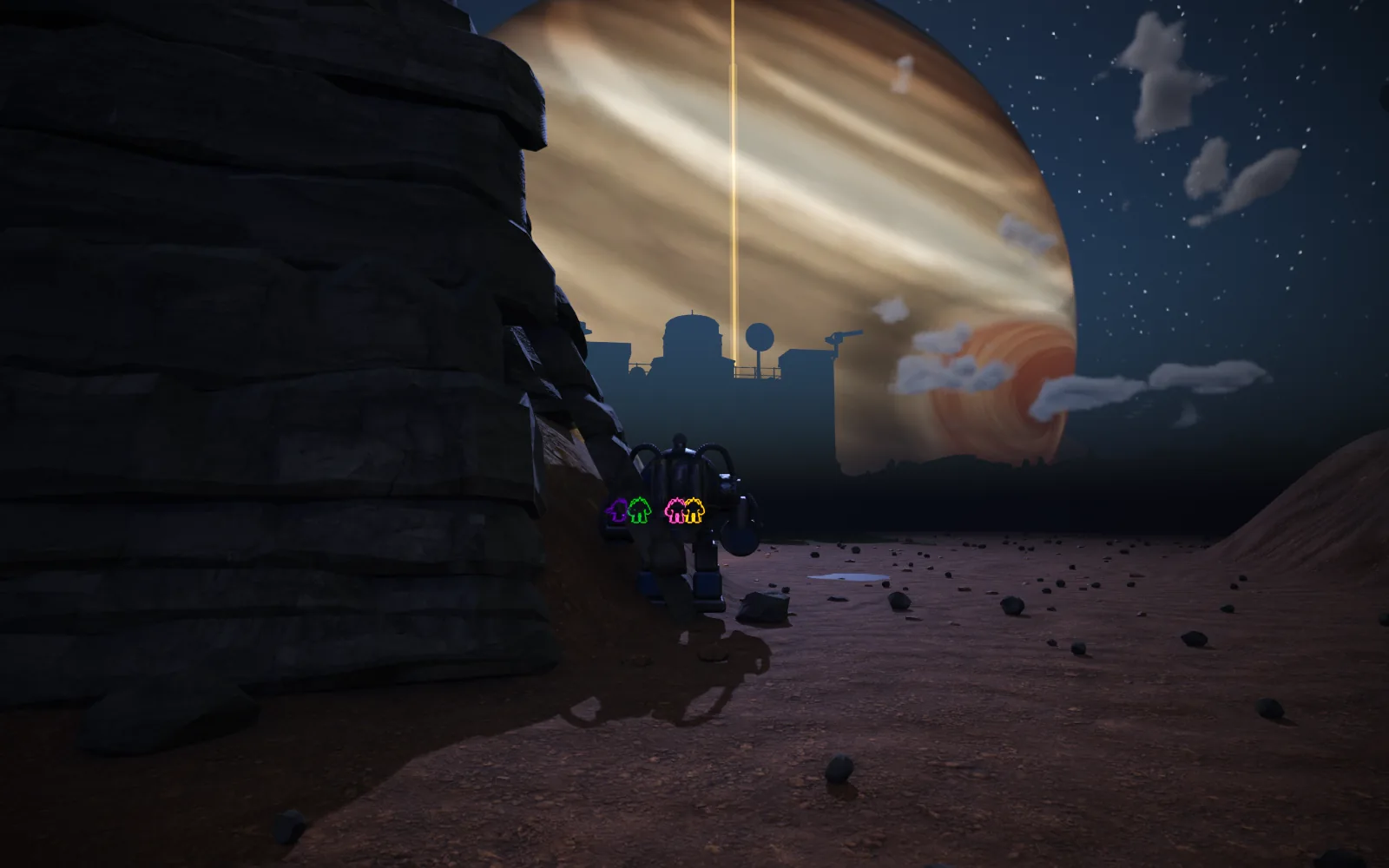
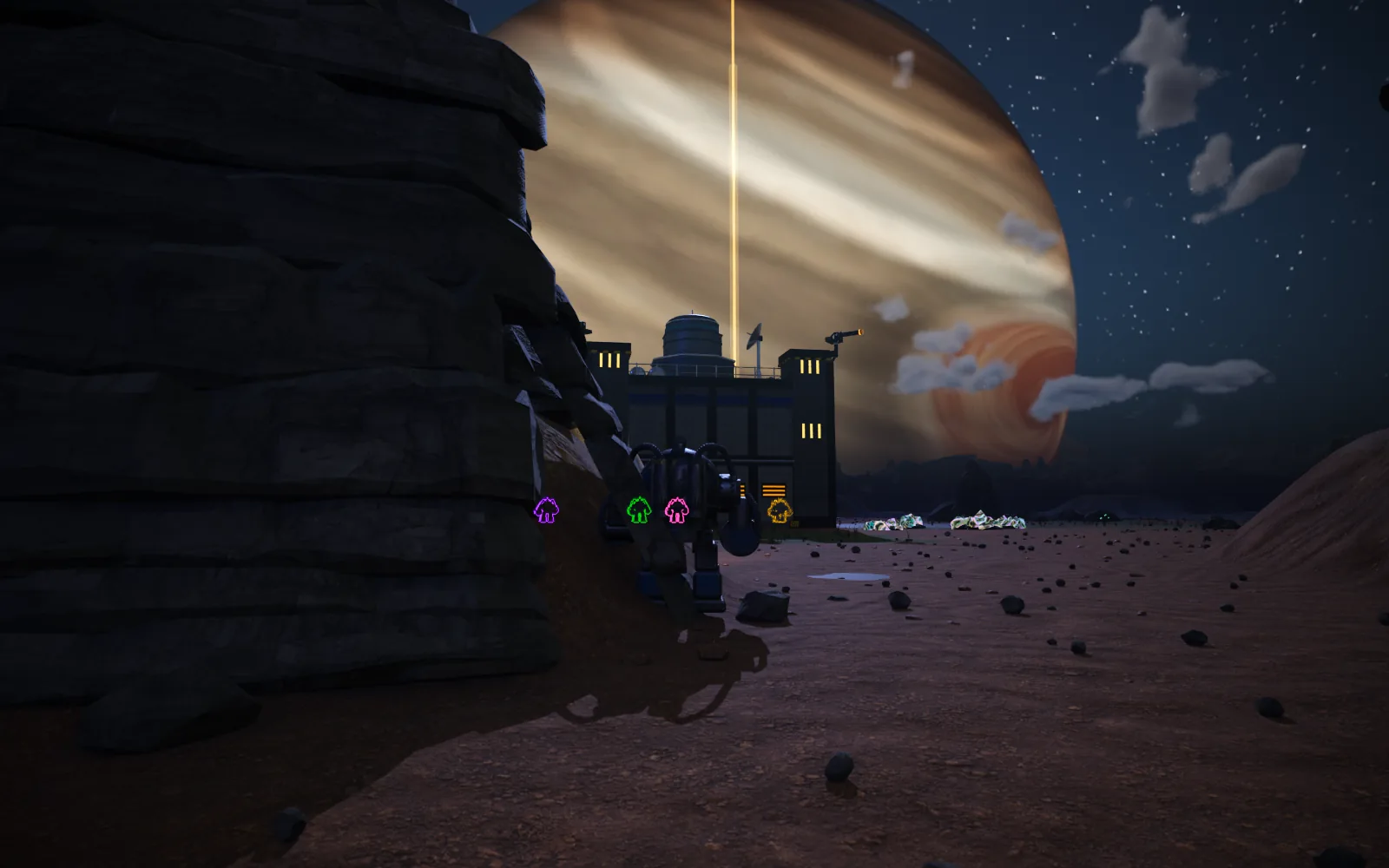
At night a Citadel 35 cells away was a flat black cut-out, and so was everything past about 25 cells: one dark band with a hard edge against the giant-lit sky. A Dropship flying off faded into it. The haze round a driven unit now reaches 70 cells under the evening's ringlight, and less as the giant's lit face shrinks toward dawn. No far thing goes more than 88% of the way into it, so everything keeps a silhouette, and lights are veiled half as much as rock, so a far building at night is a dark mass with its lamps. It costs nothing measurable. Two days later I asked for the opposite up close.
The other three were about guns and building. The Citadel's roof guns were invisible in play, and now they draw. The Sentinel's missiles burst under a flying bug, and now every weapon aims at its target's body at the height it flies. And building limits counted the whole realm; now they count the region you're in, and you can demolish the realm's buildings for half their price back.
Before and after
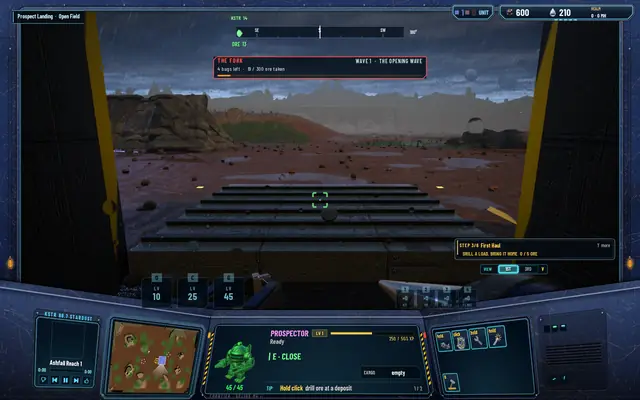 In the hall, looking out: before, rain inside.
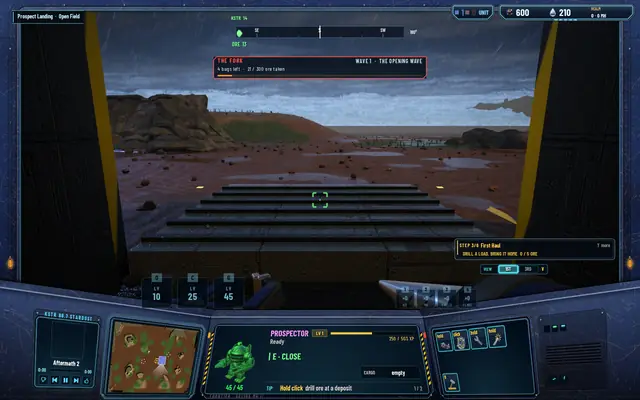 After: it stops at the door.
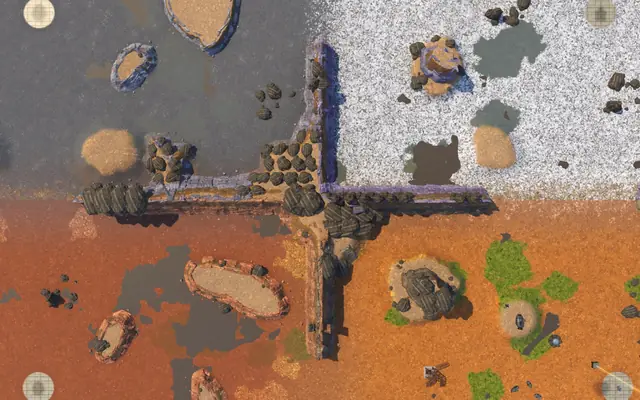 Four regions' corner, before: a cross.
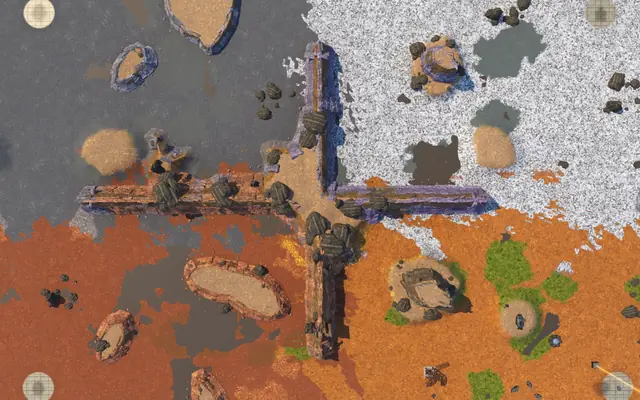 After.
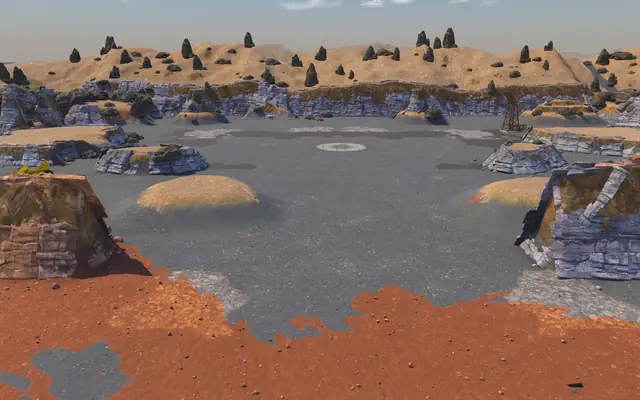 Rust into ash, from 14 cells up.
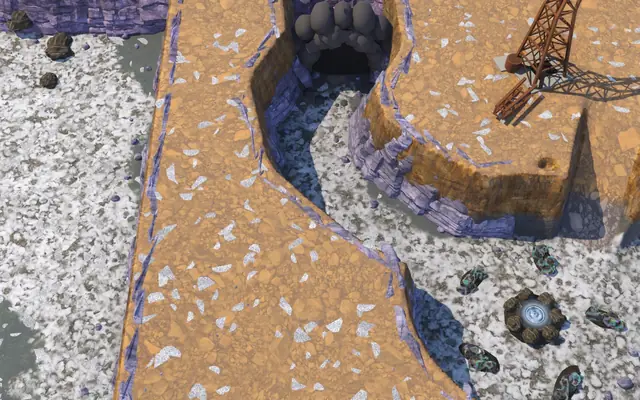 The Fork from above, before.
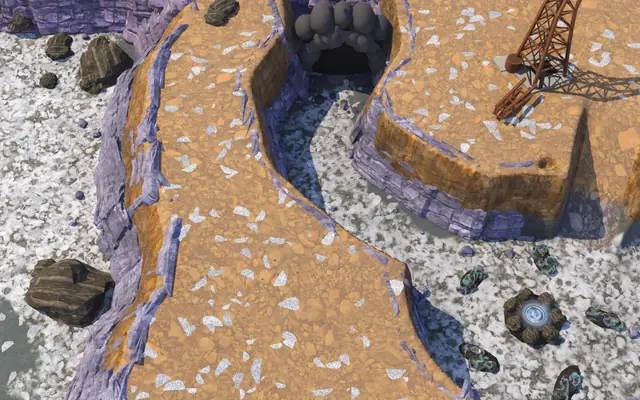 After erosion.
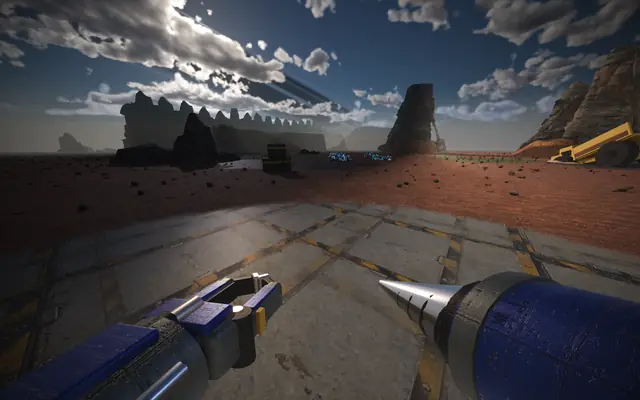 The 16:00 sweep coming in from the pad.
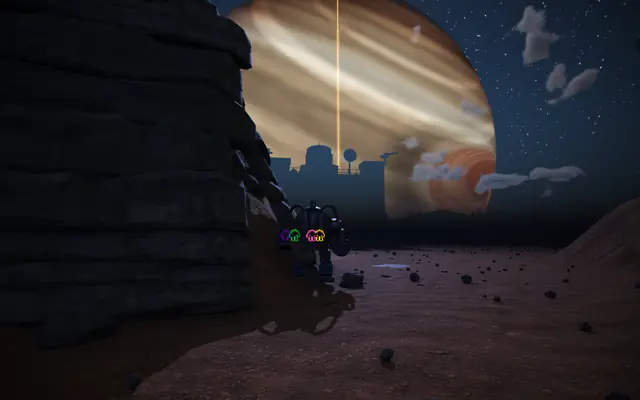 Night at 34 cells, before: a black cut-out.
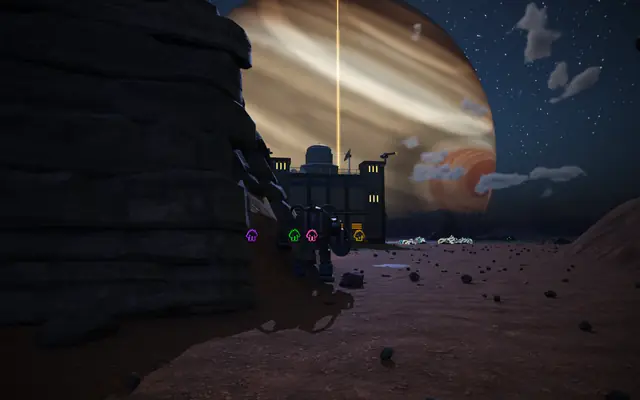 After: its shape and its lamps.
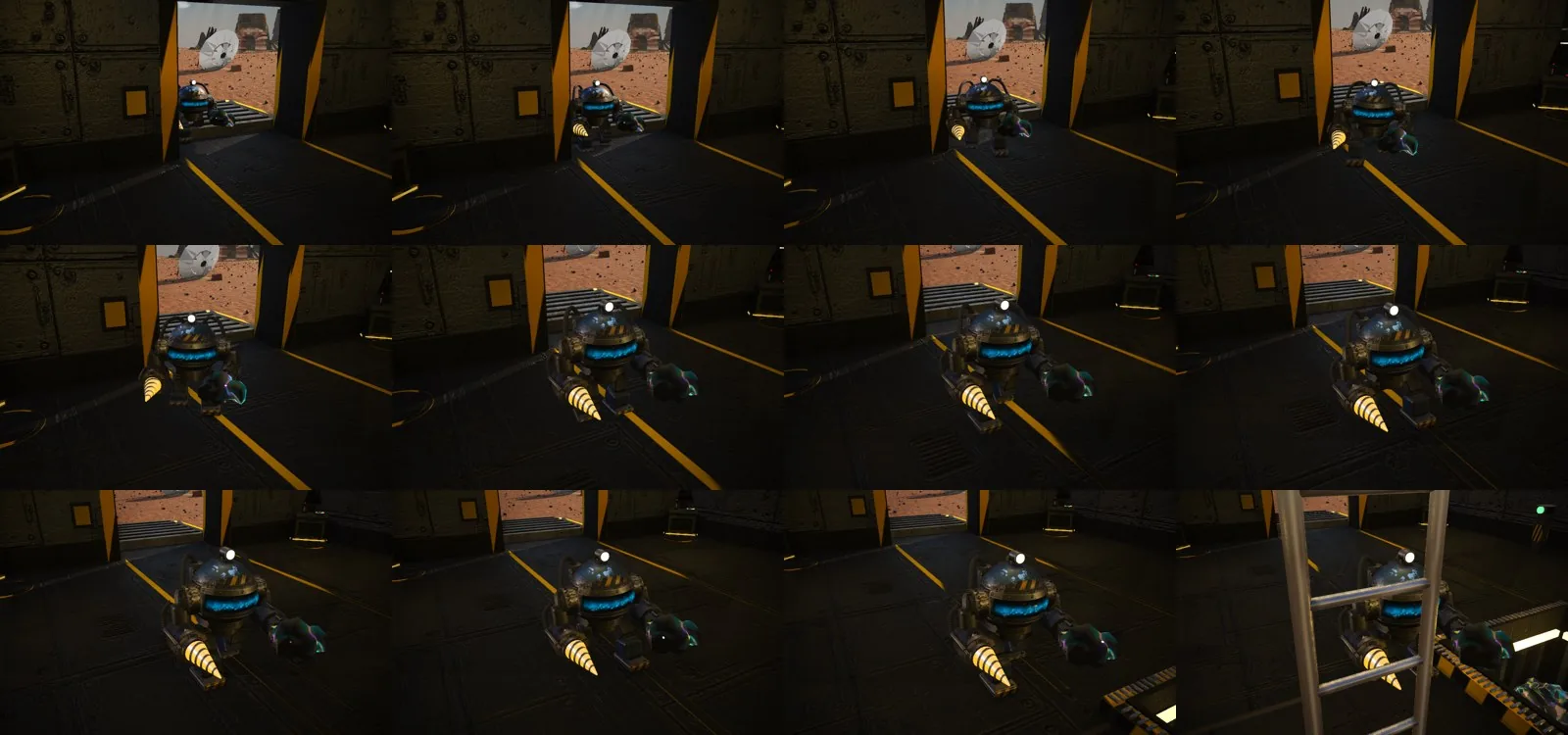
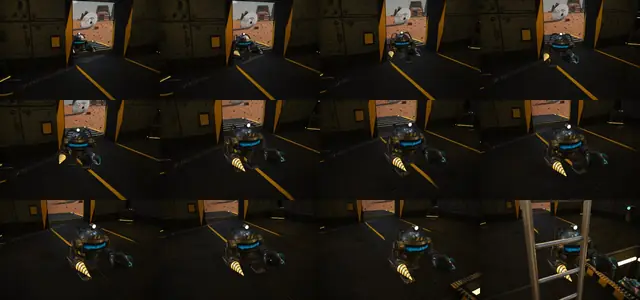 An AI Prospector walking the hall's lane to the pit, legs in stride.
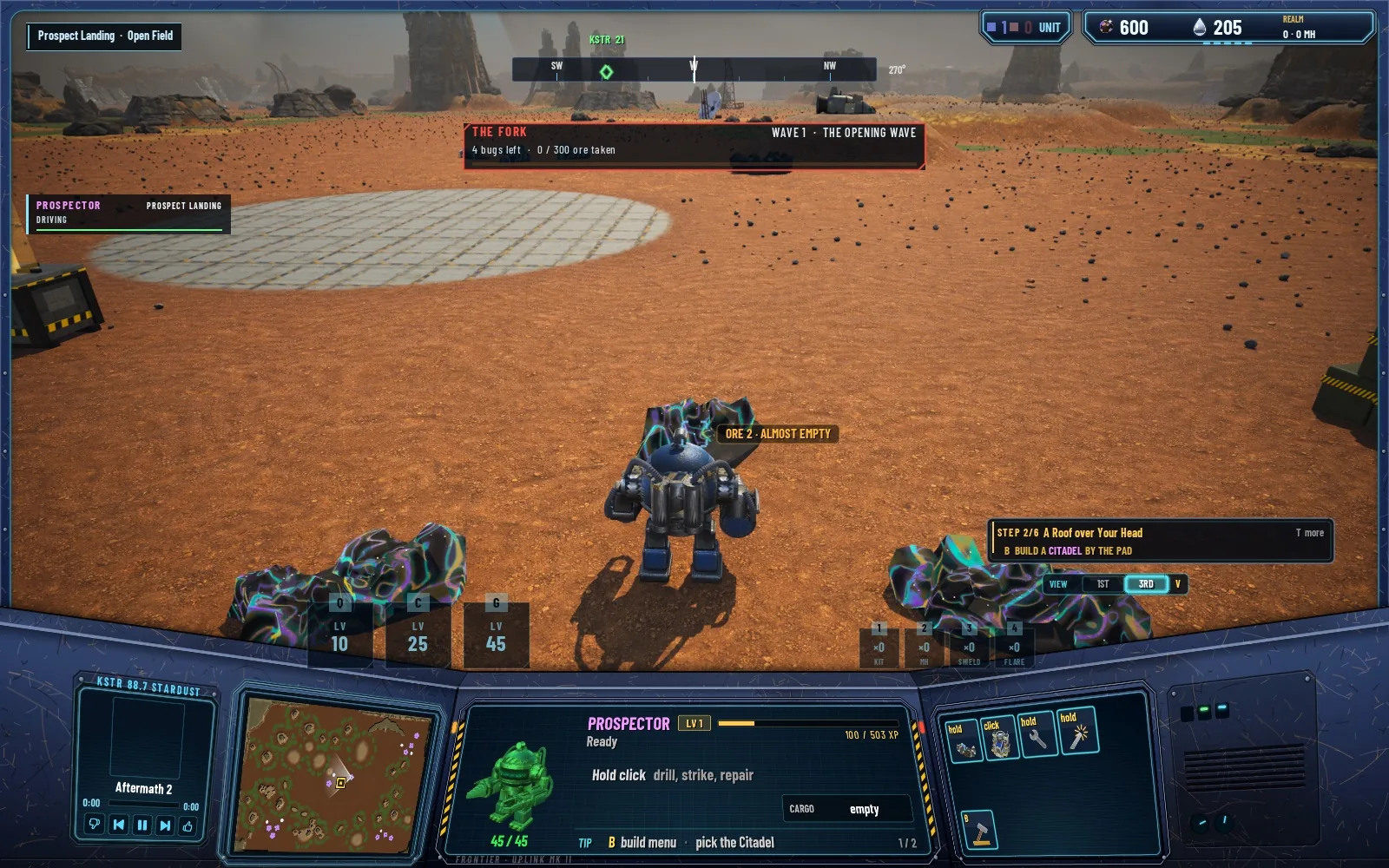
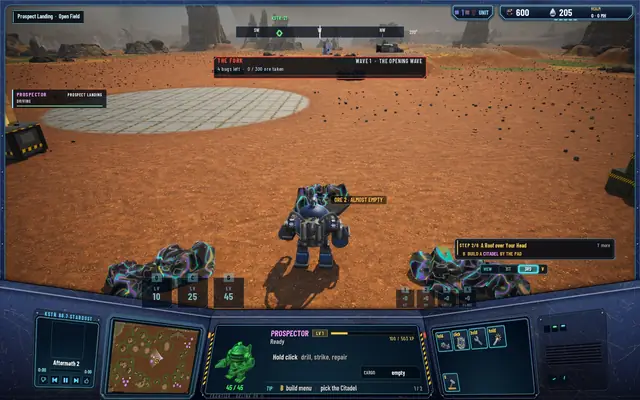 ORE 2 · ALMOST EMPTY: not worth the drill.
Two more, on 21 October
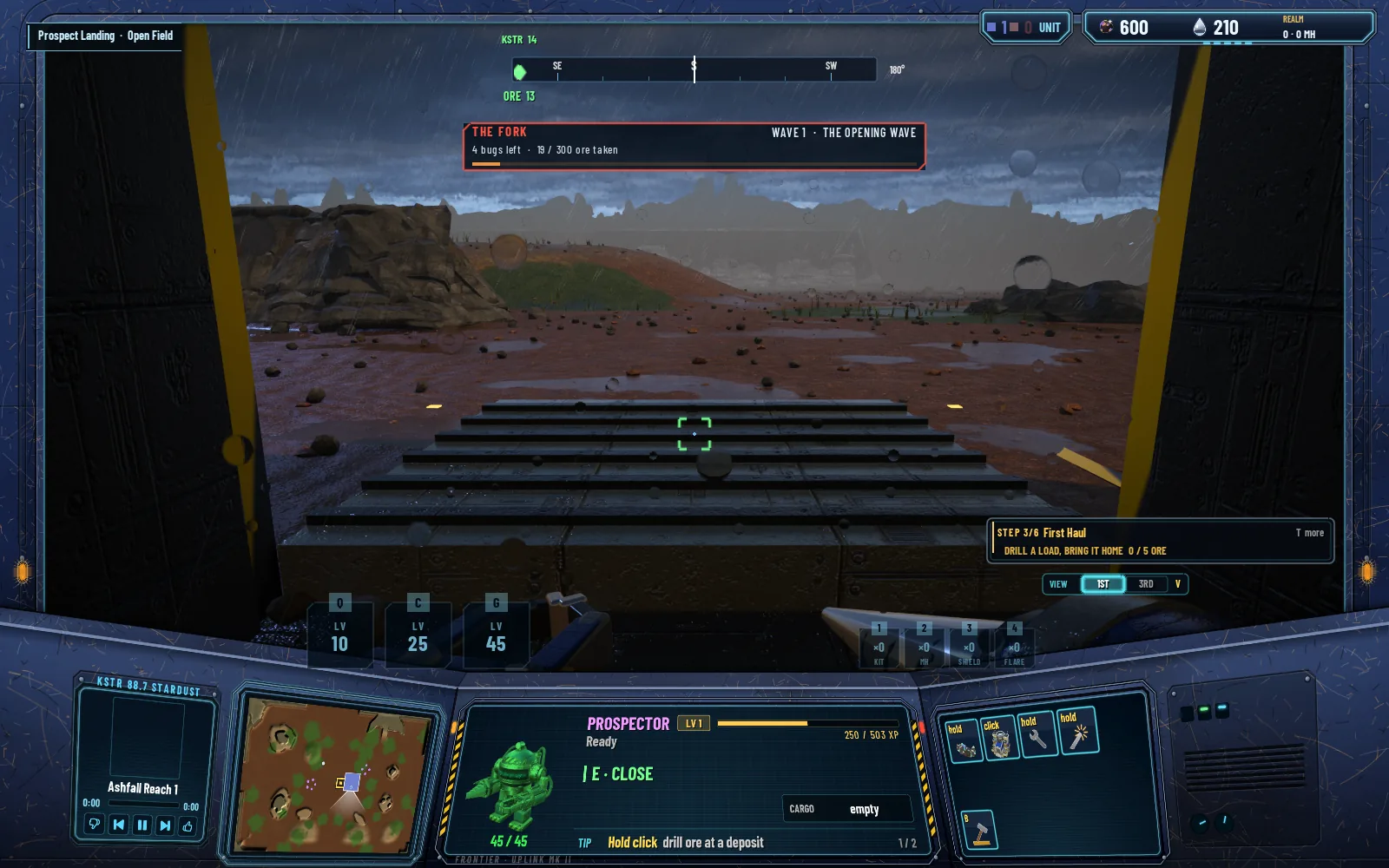
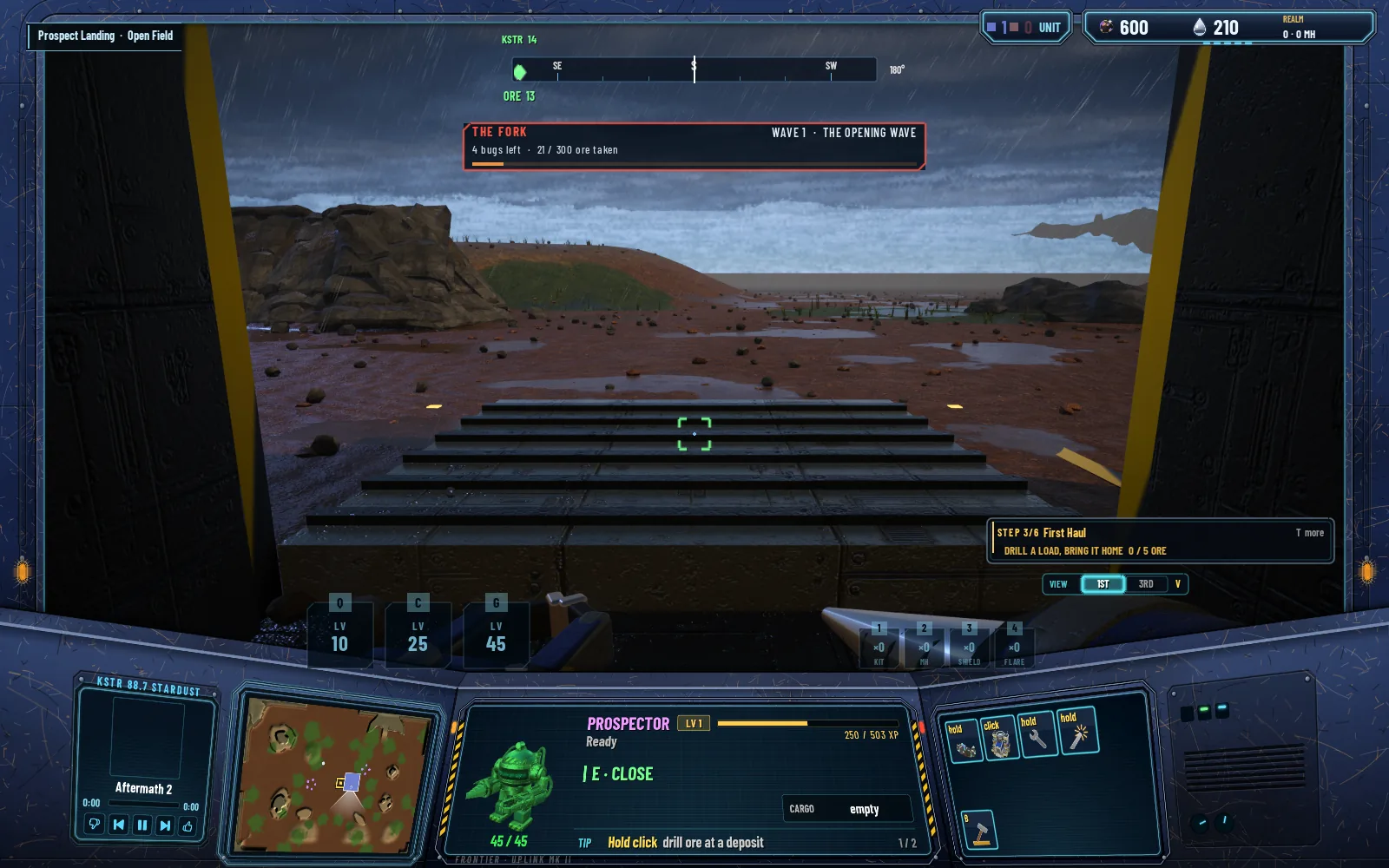
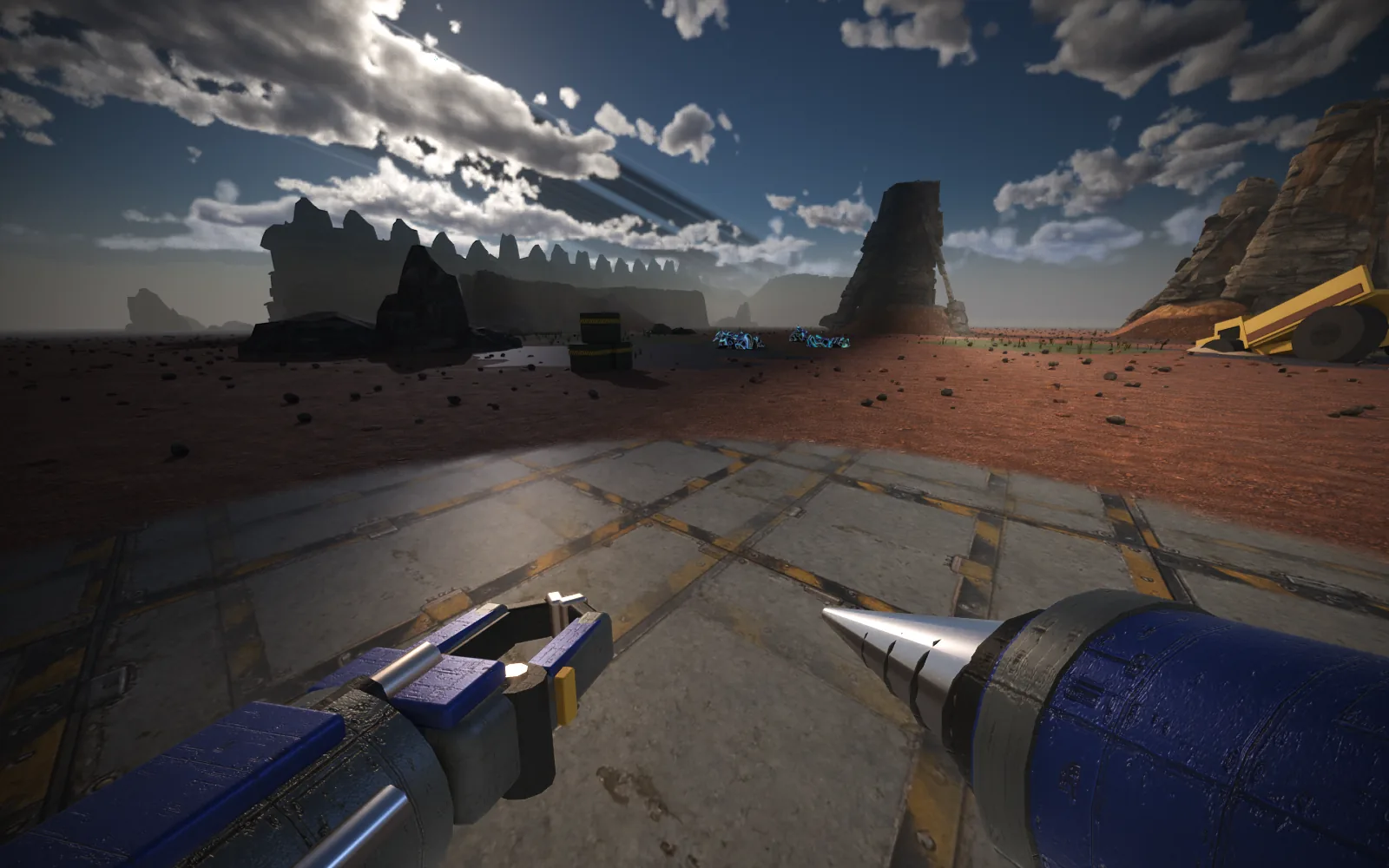
Driving the Prospector, I found I was drilling mounds that gave me 2 ore. Now when the crosshair is on an ore mound or a well within about three drill reaches, the count shows beside the reticle: "ORE 340", or "ORE 2 · ALMOST EMPTY" in the warning colour once less than a load is left, or "EMPTY". It works in first and third person, from the count the game already has, with nothing new sent by the server.
The other one was feet. The AI's Prospectors glided through the Citadel's hall with their legs frozen or standing: the hall's walking lane moved them without booking any stride. Now the legs follow the ground a unit really covers. Where the simulation walks it, they use its stride. Otherwise, after a push from another body or a correction from the server, they use the distance moved that frame, backwards when it backs up, and stand still a quarter of a second after it stops.