Regions 2.4 times as wide, and land an AI composes
The Citadel became a 12-by-12 hall you walk into, and the other buildings and the Dropship grew to match it. After that the regions felt cramped, so on 20 October I asked for them to grow by the same factor. Each one is now 2.4 times as wide and as deep, with as much in it per cell as before: about six times the ore, the wells, the rock and the Brood.
The sizes
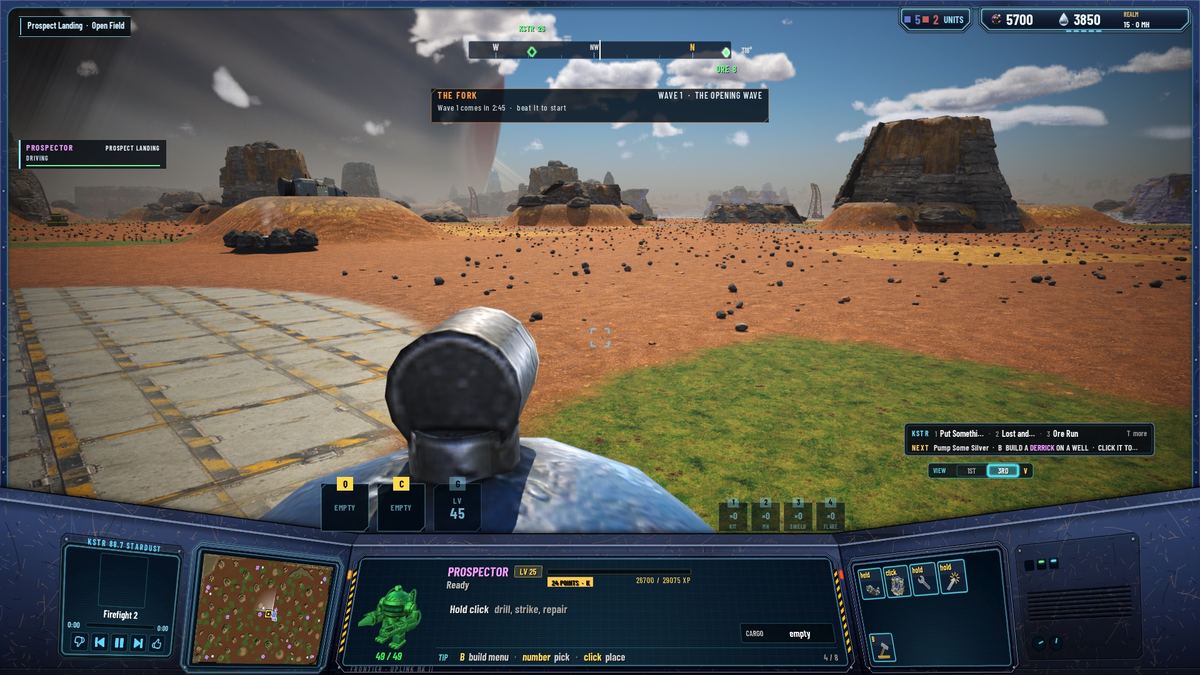
A medium region was 144 by 96 cells and is now 346 by 230. Small, large and huge grew the same way, to the nearest even cell. The RTS mode keeps its maps; only the regions of the RPG's world grew. Units keep their speed and size, so crossing a region takes about 2.4 times as long.
The rule was to keep the density. A medium region had one or two ore veins and one well; it now has 9 to 12 veins and 5 or 6 wells, so the world holds 689,300 ore where it held 119,600. Each mound still holds what it did, so there are more mounds and none are richer. The wild Brood scale with the area too, up to 35 bugs in a level-1 region. Raids stay at one per region every few minutes, because they come for the pilots' buildings.
Land said in words
A day earlier the ground had changed too. I was tired of always being surrounded by cliffs: about 40% of every region was wall or cliff, standing round the edge. What I wanted was open desert out to the horizon with buttes, mesas and spires standing free on it. The first try had an agent placing rocks one by one, and it looked placed. When I say sculpting, I mean a way for an AI to make land that doesn't look hand-placed.
Now a region file says what the land does, and code draws its shape. There are eight landforms: a butte, a mesa, a cluster of spires, an escarpment along a line, a low shelf, a broad swell, a dry wash and a boulder field. Each takes a size, and every outline is bent by noise at two scales and bitten by erosion, so no edge runs straight. A style (open desert, badlands, mesa country) fills in its own forms wherever the rules leave room. The rules keep rock off what the game needs: a pad's field of fire, the passages, the veins and wells, the canyon zones.
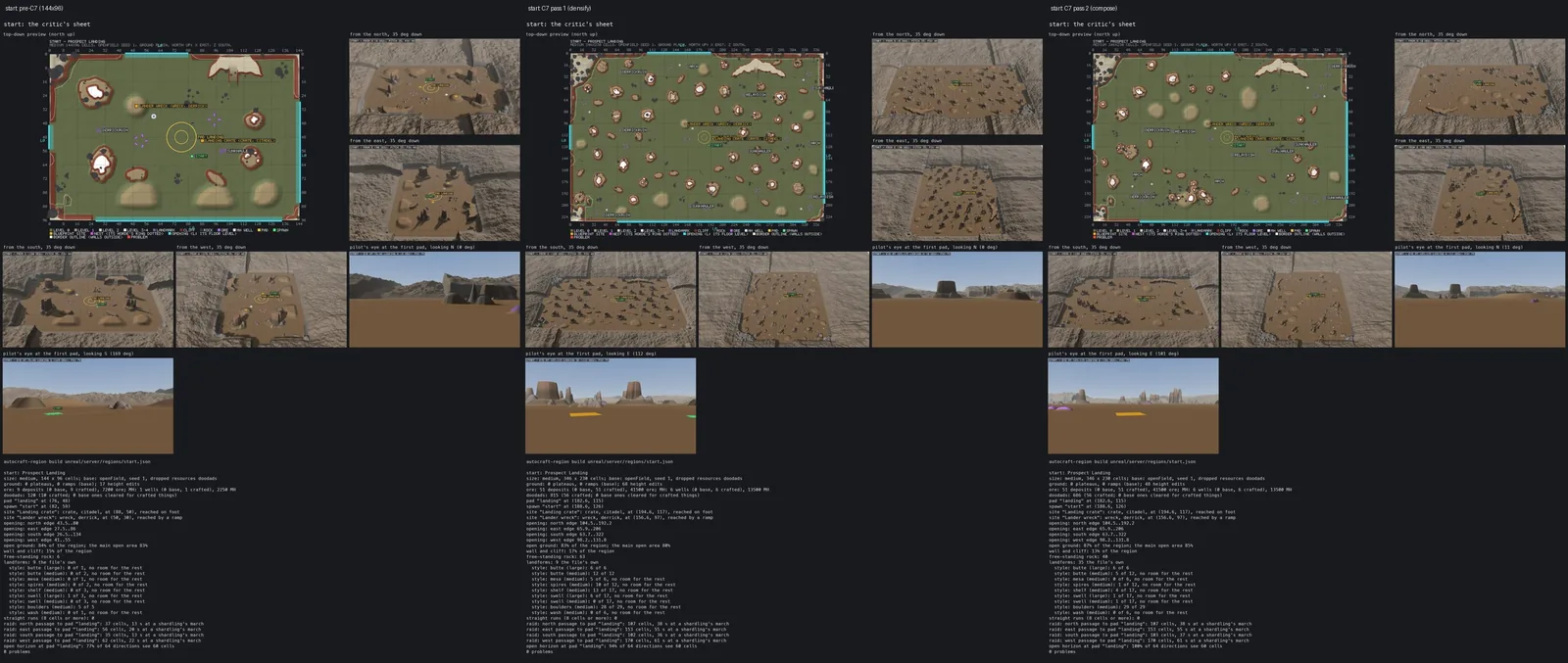
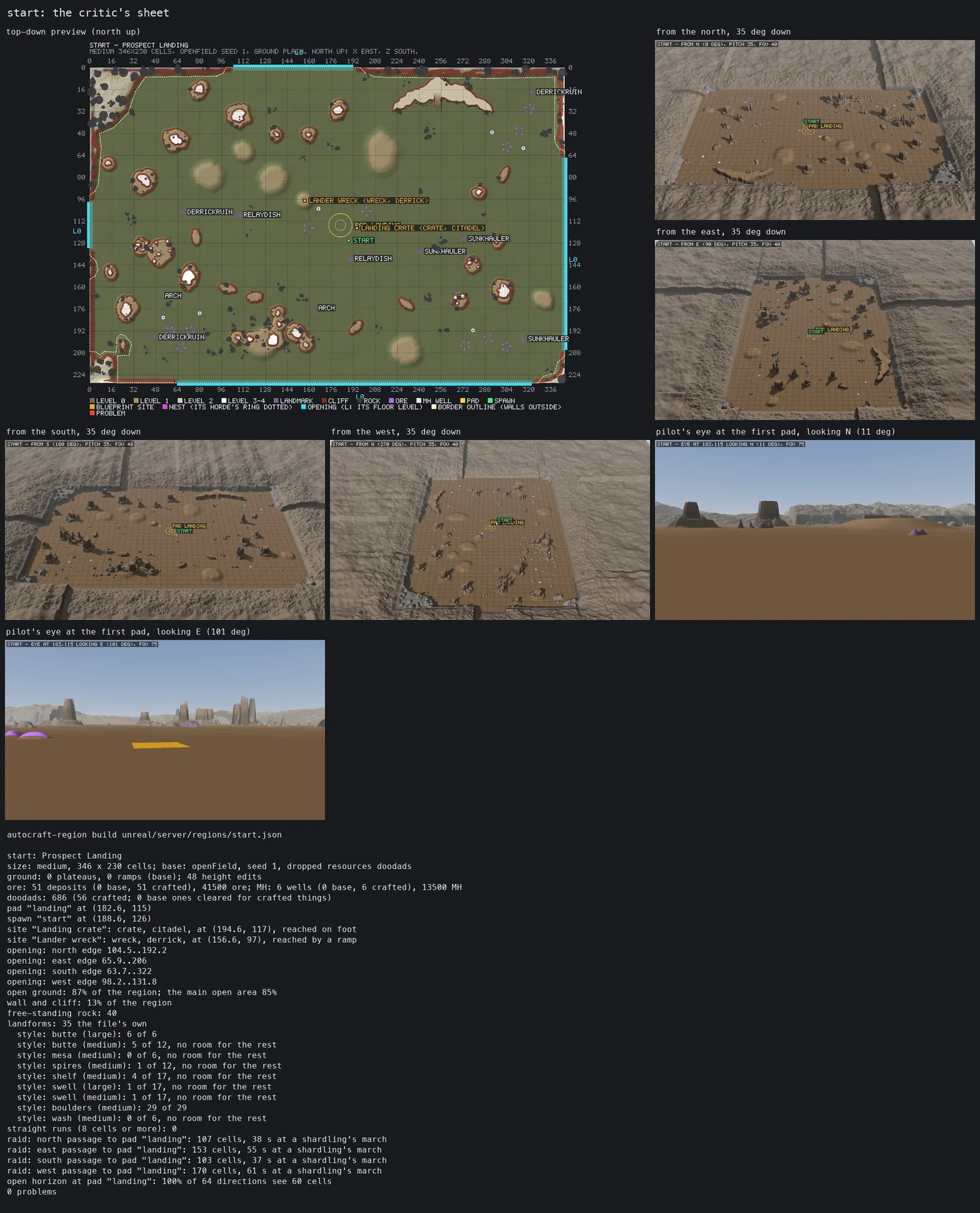
The agents see their work on a critic sheet: the region from above, four oblique views, two views from a pilot's eye at the pad, and the build's measures, such as how much is wall and how much of the horizon is open from the pad. In Prospect Landing the wall and cliff went from 41% to 15%, and the open horizon at the pad from 38% to 77%.
Composed, not sprinkled
The first pass at the new size kept the counts by spreading everything evenly, and from above it read as wallpaper. The second pass composes each region. Its veins sit in three or four ore fields of 2 to 4 veins, each with a well or two and a ruin beside it. A Mule's routes join the pad, every passage and every field, and are kept clear 8 cells either side. Noise picks the rough ground away from the routes, and the rock gathers there: a few large features (a massif of mesas, a group of buttes, a spire field) and dense gardens around them. The rest stays open plain. In Prospect Landing, open plain went from 30% of the land in the first pass to 49%, and from the pad every one of 64 directions measured sees at least 60 cells.
Prospect Landing, before and after
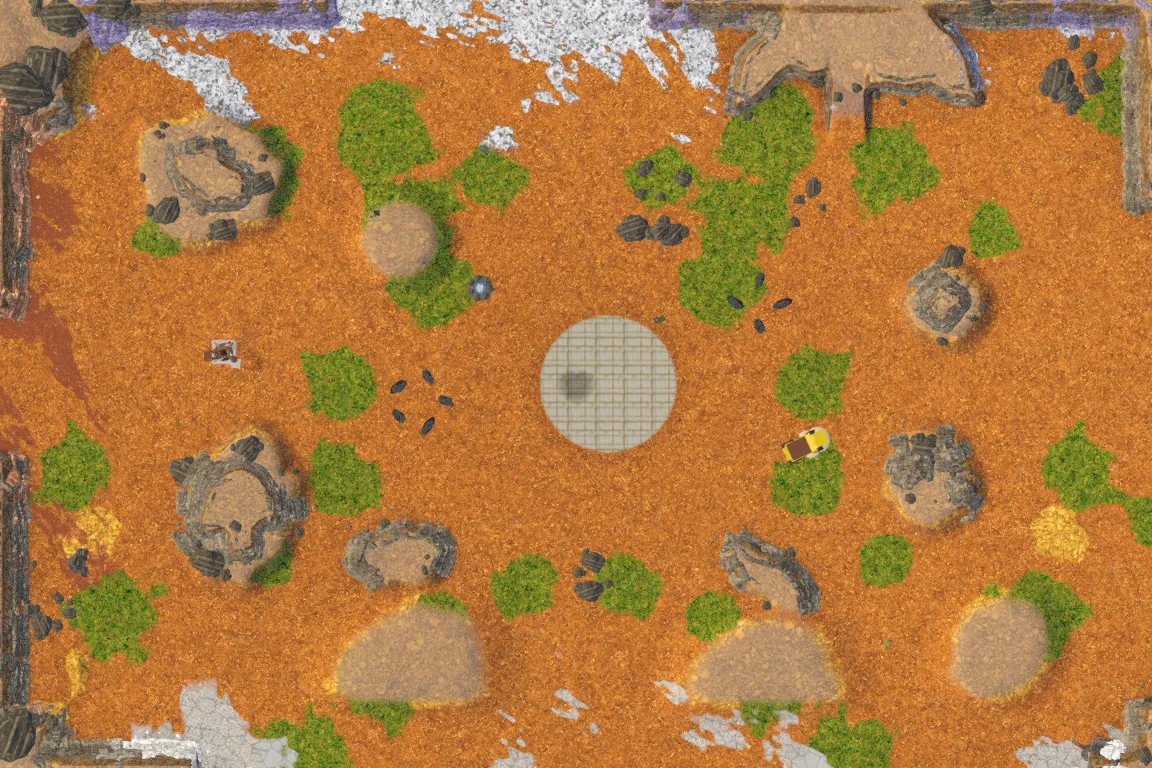
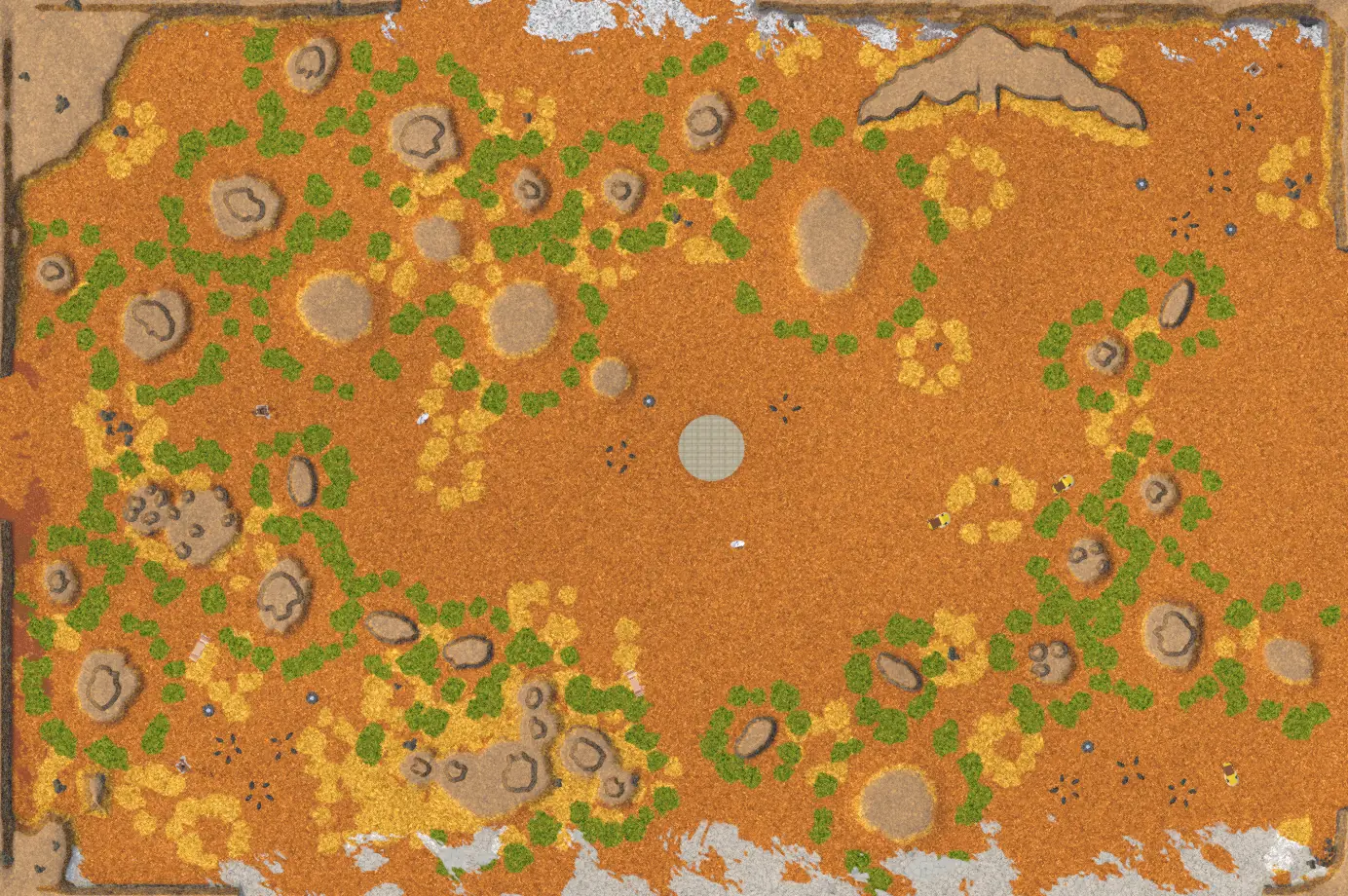
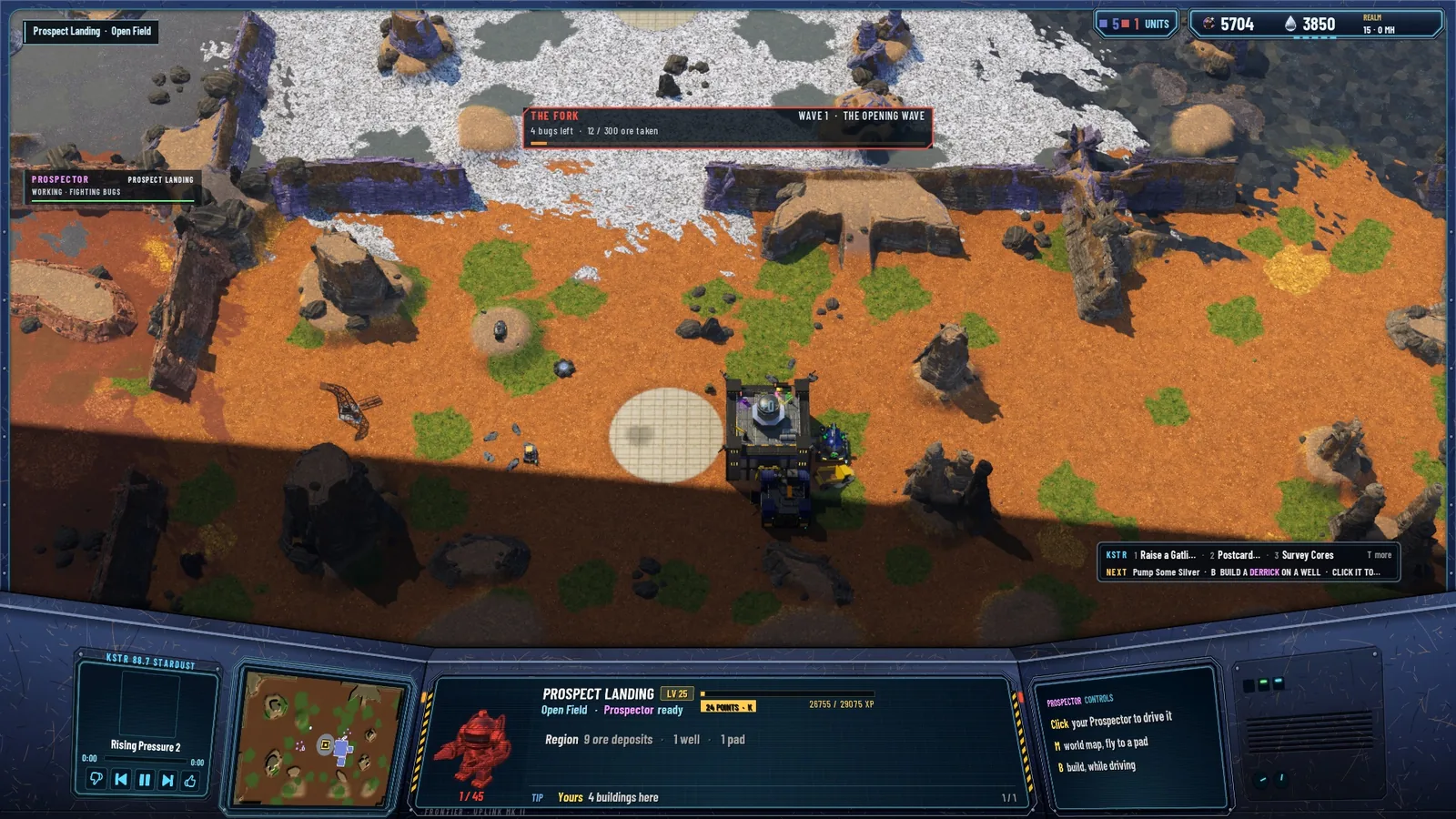
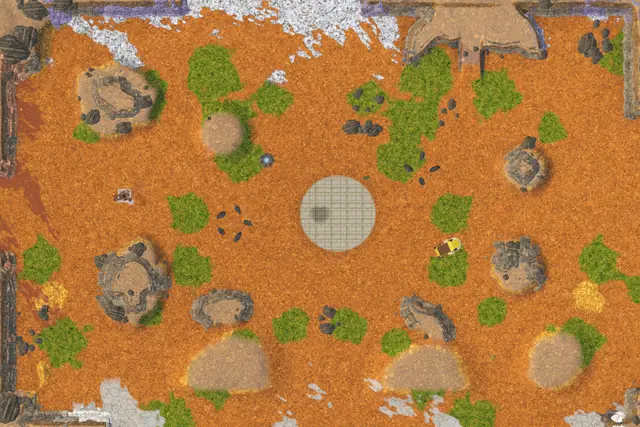 Before: 144 × 96 cells, drawn at 8 pixels a cell.
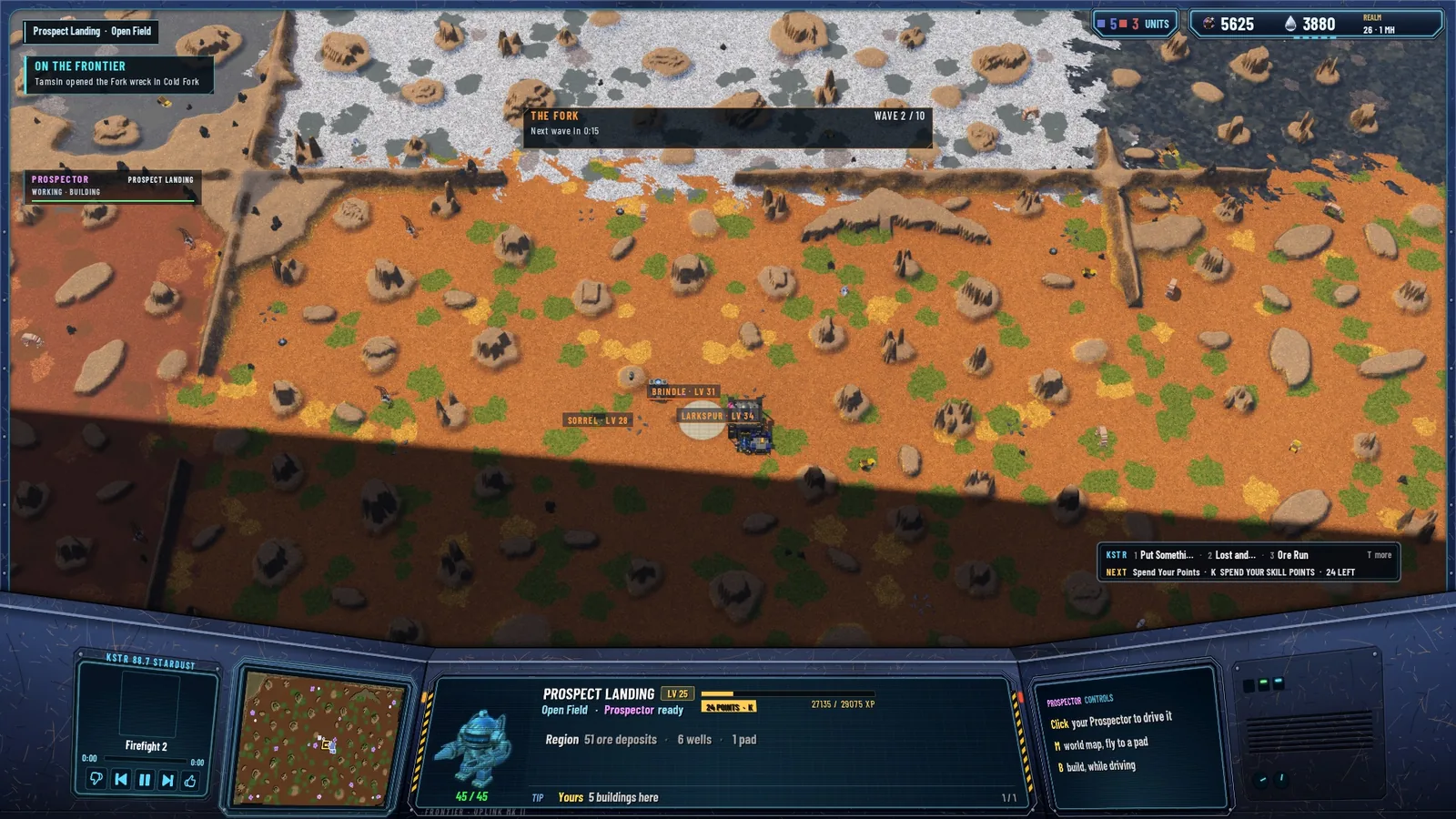
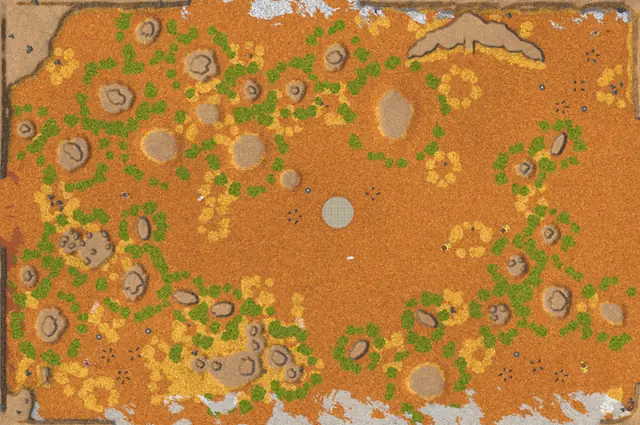 After: 346 × 230 cells at 4 pixels a cell, so the same picture size holds 5.76 times the ground.
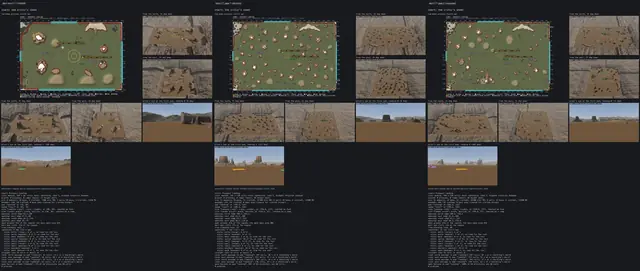 The critic sheets: before, the even first pass, the composed second pass.
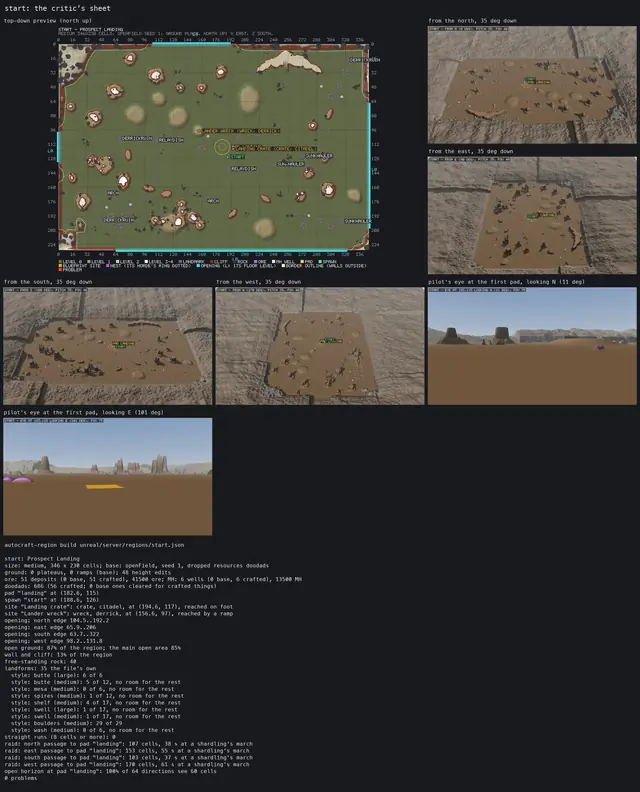 One critic sheet, the way the agents see a region.
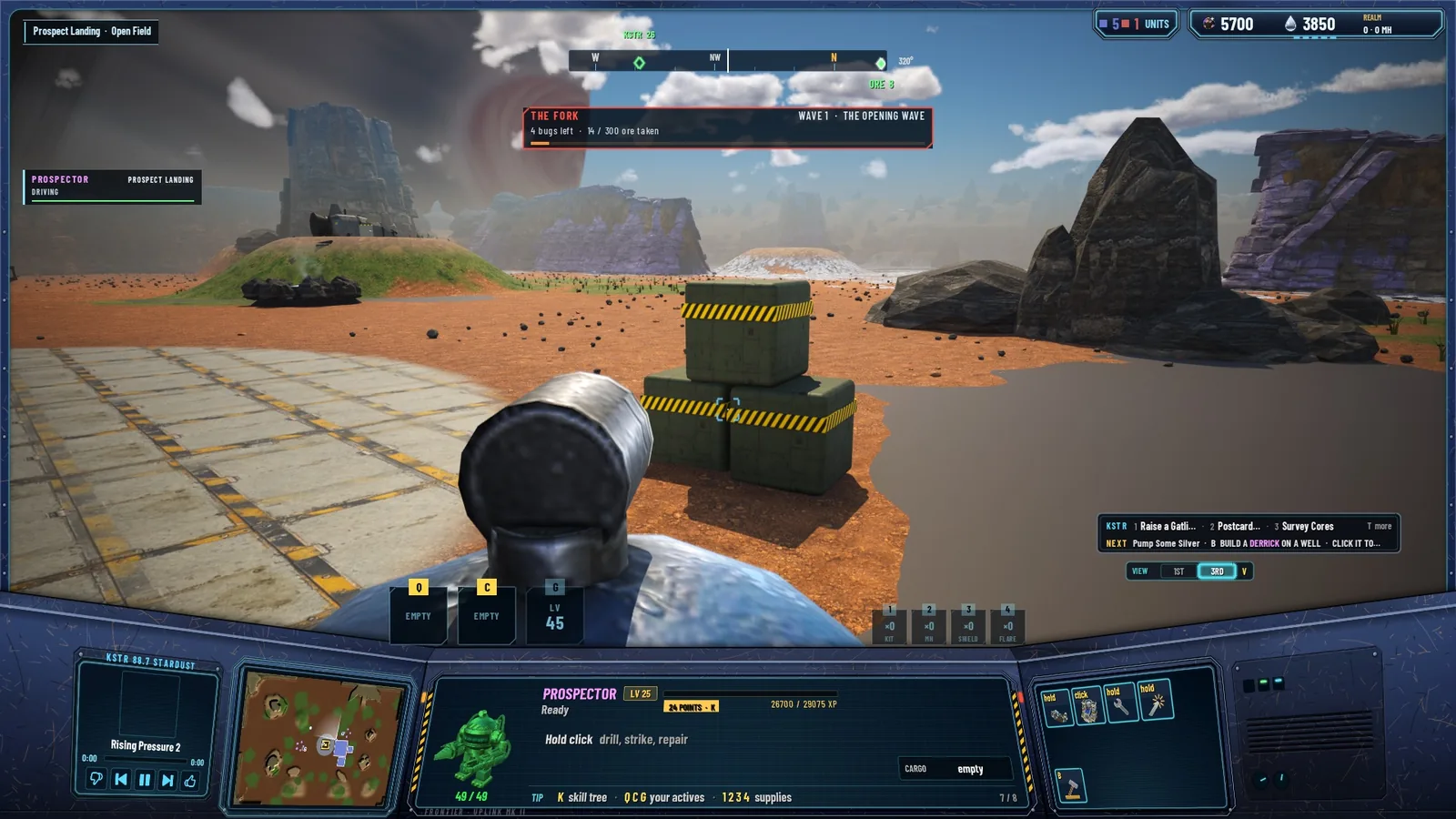
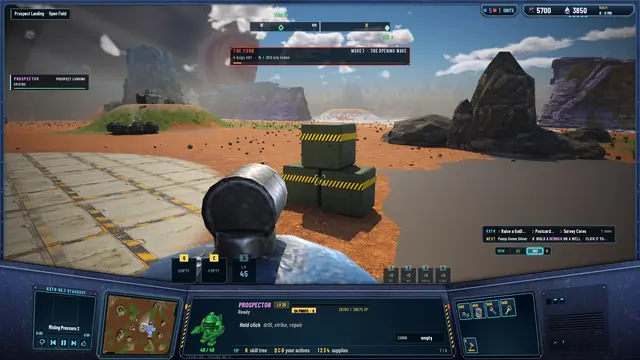 The pilot's view at the pad, before.
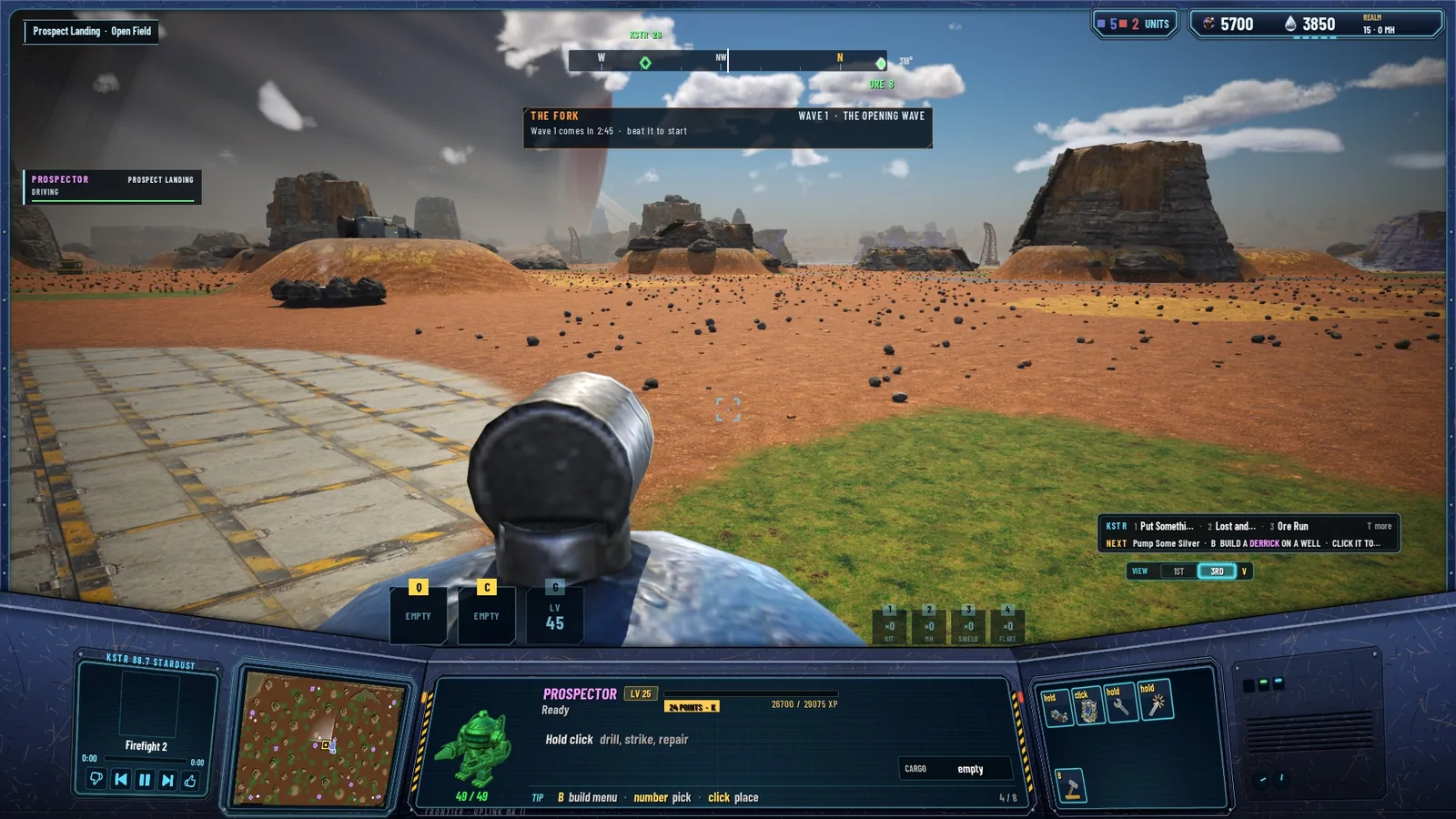
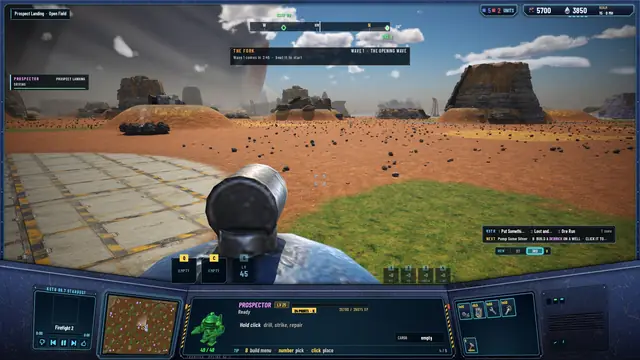 After.
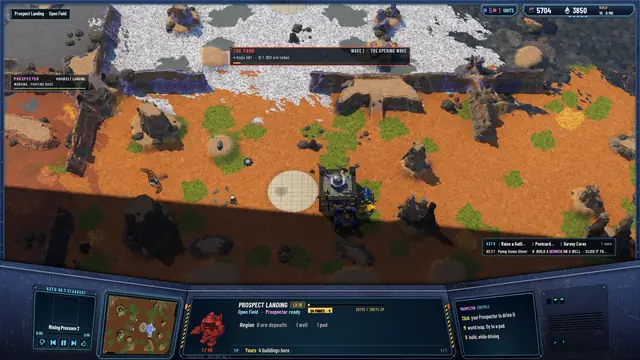 The top-down camera at its widest, before.
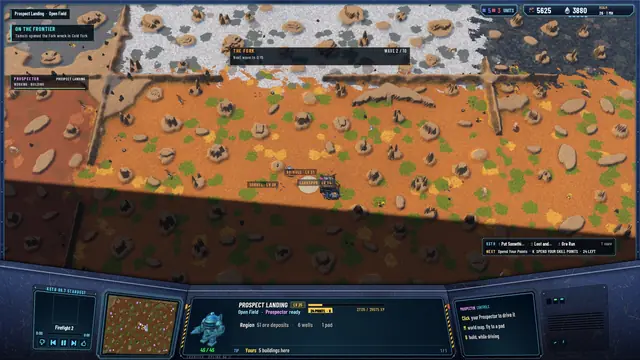 After: the same zoom shows a smaller share of the region.
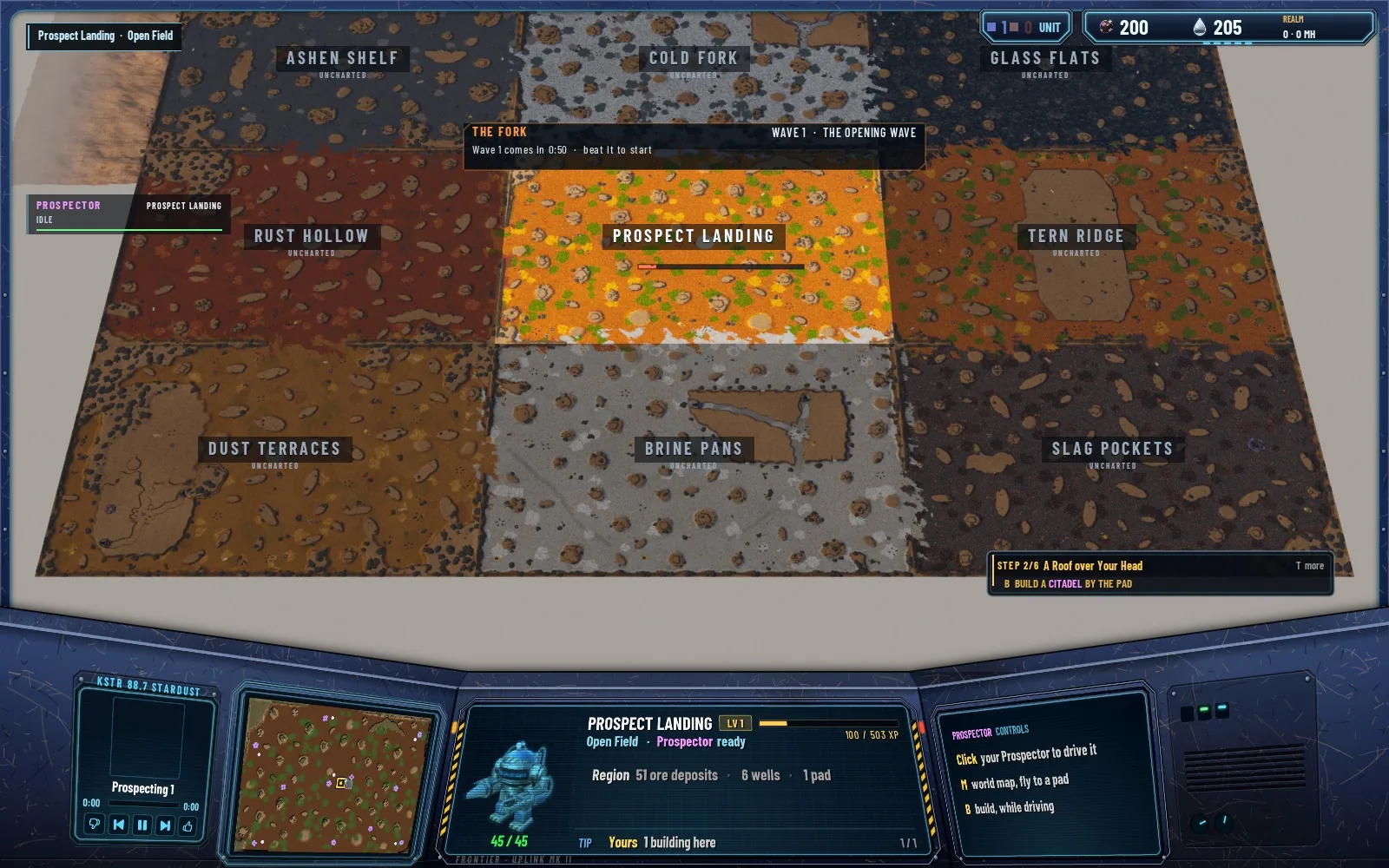
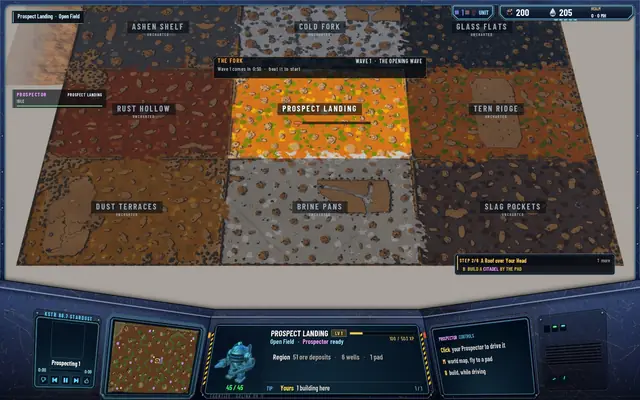 The world view: the nine regions of the First Reach.
Drawing six times the ground
The ground is now drawn in tiles with four levels of detail, coarser past 60, 130 and 260 cells, and far rocks and small props are culled. In the pilot's view at noon the ground went from 1.29 million triangles drawn to 0.61 million, on the bigger region. Across ten scenes, clear and rain, day and night, top-down and third person, the GPU frame stayed within 0.7 ms of what it was, and zoomed out to the world view it got faster, 13.0 ms down to 9.0. The pilot's region builds in 2.0 seconds on arrival, from 2.5. The far haze reaches 2.4 times as far, so you take in as much of a region as before.
The server holds 95 MB where it held 25, and a step of all nine regions with a pilot in one takes 0.039 ms where it took 0.010. The snapshot writer was also sending every item again on any link with latency; now an item the client already has is skipped, and a lagged pilot standing still gets snapshots of 138 to 151 bytes, down from 407.
What it costs you
Every position in every region moved, so an old world can't open. The game says so and offers NEW WORLD. The far ring of mesas past the world's rim, which would give the open floor a horizon to run to, isn't built yet.